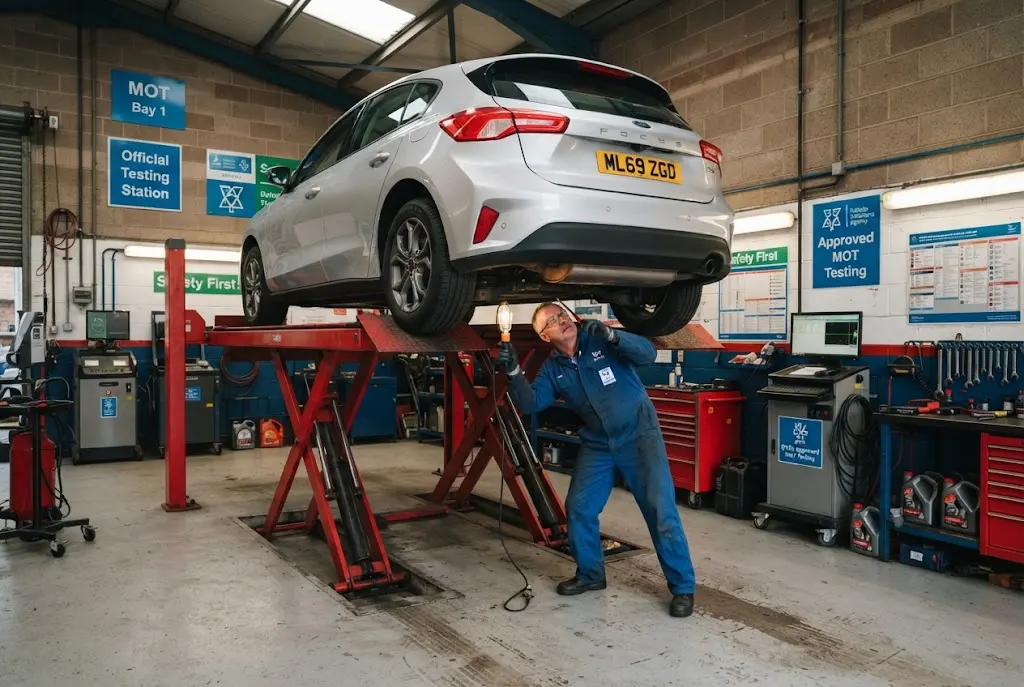
If you are wondering how much is an MOT for a car, the answer depends on the type of vehicle and the testing station you choose. For a standard car, there is a legal maximum fee for the MOT test itself, although garages may charge less than that amount.
The important point is that the MOT test price is not necessarily the same as the total amount you may spend on keeping your vehicle roadworthy. If your car fails, repairs, replacement parts and a retest can increase the final bill considerably.
This guide explains how MOT charges work in the UK, what you can expect to pay, what happens if your car fails, and how to avoid confusing the MOT test fee with repair costs.
How Much Is an MOT for a Car?
For a standard car with up to eight passenger seats, the maximum legal MOT test fee is £54.85. This is the maximum amount an authorised MOT testing station can charge for the test itself.
However, the actual price you pay can be lower. Some garages offer MOT tests at a discounted rate, particularly when the test is combined with servicing or other workshop work.
When comparing garages, therefore, do not assume that the first advertised price is the only cost you will face. Check whether the price applies to the MOT test alone and whether additional services are included.
How Much Does a Car MOT Cost at Different Garages?
The price of an MOT can vary between testing stations even though the government sets maximum test fees. A garage may choose to charge less than the legal maximum as part of its pricing strategy.
For example, a testing station may advertise a lower MOT price to attract customers and then offer servicing, repairs or other vehicle maintenance separately.
It is worth comparing local garages before booking, particularly if your MOT is due soon. However, price should not be the only consideration. Look for an authorised MOT testing station and check what is included in the advertised price.
How Much Does MOT Cost for Car Repairs?
One of the biggest misunderstandings about MOT pricing is that the test fee covers any repairs needed after a failure. It does not.
The MOT test checks specific safety and environmental requirements. If the vehicle fails because of defective brakes, tyres, lights, suspension or another problem, the cost of putting the vehicle right is separate.
Repair prices depend on the fault, the vehicle, replacement parts and labour. A minor issue can be inexpensive to resolve, while a major mechanical problem can cost substantially more.
If you are concerned about unexpected repair bills after an MOT, understanding finance for car repairs can help you explore possible payment options before committing to expensive work.
What Is Included in the MOT Test?
An MOT is designed to check whether a vehicle meets the required legal standards at the time of testing. It covers a range of areas associated with road safety and environmental requirements.
Depending on the vehicle, the tester can check areas such as:
- Lights and electrical equipment
- Steering and suspension
- Brakes
- Tyres and wheels
- Seat belts
- Body and vehicle structure
- Exhaust and emissions
- Registration plates
- Doors and other relevant components
The exact requirements depend on the vehicle and its age. An MOT is not a full mechanical inspection, so passing an MOT should not be interpreted as a guarantee that the car is mechanically perfect.
How Much Is Car MOT If the Vehicle Fails?
If your car fails its MOT, the total cost will depend on what needs to be repaired.
The test station should provide a record showing the reasons for the failure. Some defects may be relatively straightforward to repair, such as replacing a defective bulb or addressing certain tyre problems. Other failures can require more extensive mechanical work.
Before authorising repairs, ask the garage for a clear explanation of the problem and an estimate of the expected cost. If the repair is expensive, you may wish to compare quotations from other reputable garages.
Where appropriate, a professional inspection can also help you understand the condition of a vehicle. Our guide to car inspection explains how a more detailed pre-purchase assessment differs from an MOT.
Can You Get a Free MOT?
Some garages may advertise free or heavily discounted MOT tests as part of another service package. However, you should always check the terms carefully.
A free MOT offer may require you to purchase a service or meet another condition. In other cases, a garage may simply discount the test as a promotional offer.
There is nothing wrong with choosing a discounted MOT, provided the testing station is authorised and you understand exactly what you are paying for.
What Happens If Your Car Passes Its MOT?
If the vehicle passes, you receive an MOT result and the test is recorded electronically. You can also check a vehicle’s MOT history online using the official government service.
A pass means the vehicle met the required MOT standards at the time of the test. It does not mean that every component is in perfect condition or that the vehicle will not require maintenance before the next MOT.
For this reason, regular servicing and routine maintenance remain important even when your car has recently passed its MOT.
What Happens If Your Car Has Minor or Major Defects?
MOT results can identify different categories of defects. These can include advisories and defects that cause a vehicle to fail.
An advisory does not necessarily mean the vehicle has failed. Instead, it can highlight an item that may need attention in the future.
More serious defects can result in a failure. In that situation, the vehicle may need repairs before it can legally be driven in circumstances covered by the MOT rules.
Always read the result carefully and ask the tester to explain anything you do not understand.
Do You Pay for an MOT Retest?
A retest may involve an additional charge depending on the circumstances, including where the vehicle is repaired elsewhere or certain conditions are not met.
Some testing stations may provide a free partial or full retest when they carry out the required repairs themselves, subject to the applicable rules. Other situations can attract a retest fee.
Because retest arrangements can vary, ask the testing station what its policy is before taking the car away for repairs.
How to Keep Your MOT Cost Under Control
Although you cannot predict every repair, basic vehicle maintenance can help you identify simple problems before your MOT.
Before the test, check obvious items such as lights, tyres, windscreen condition, number plates and washer fluid. Make sure warning lights are not showing unnecessarily and that essential equipment appears to be working correctly.
These checks do not guarantee a pass, but they can help you address straightforward issues before the appointment.
Regular servicing can also help prevent neglected maintenance from developing into more expensive problems. If you need assistance away from a traditional workshop, you can also compare mobile mechanic prices for suitable repair or maintenance work.
Is an MOT the Same as a Car Service?
No. An MOT and a service have different purposes.
An MOT is a regulated test focused on specific legal safety and environmental requirements. A service is intended to maintain the vehicle and can involve replacing fluids, filters and other components according to the manufacturer’s recommendations and the vehicle’s condition.
A car can pass an MOT and still be due for a service. Conversely, a recently serviced car can still fail an MOT if it has a defect that falls within the MOT testing requirements.
When Should You Book Your MOT?
You can usually arrange an MOT test up to one month minus a day before the existing MOT expiry date while preserving the renewal date, provided the relevant conditions are met.
Booking early can give you more flexibility if the vehicle needs repairs. Leaving the test until the last minute can create unnecessary pressure if the car fails and you need to arrange additional work.
It is therefore sensible to check your MOT expiry date in advance and plan the test around your schedule.
How Much Is an MOT for a Car Compared With Potential Repairs?
The MOT test itself is relatively predictable because there is a maximum fee for a standard car. The uncertain part is what happens if the vehicle needs work.
This is why comparing only the advertised MOT price can be misleading. A £40 test may initially look attractive, but if your vehicle needs several repairs afterwards, the test fee becomes a small part of the overall cost.
Instead, think of the MOT as an important condition check rather than the complete cost of maintaining your vehicle. Keeping tyres, brakes, lights, suspension and other components in good condition throughout the year can reduce the likelihood of expensive surprises.
Final Thoughts on Car MOT Charges
So, how much is an MOT for a car? For a standard car, the legal maximum fee for the MOT test itself is £54.85, although many testing stations charge less.
The more important financial consideration is what happens if the vehicle fails. Repairs, replacement parts and possible retesting can increase the overall amount you spend.
Before booking, compare authorised testing stations, check exactly what the advertised price includes and consider the garage’s reputation as well as its fee. After the test, deal with any defects promptly and keep up with routine maintenance.
An MOT is an essential part of keeping a vehicle legally roadworthy, but it should work alongside regular servicing, sensible maintenance and independent checks when you are buying a used car.