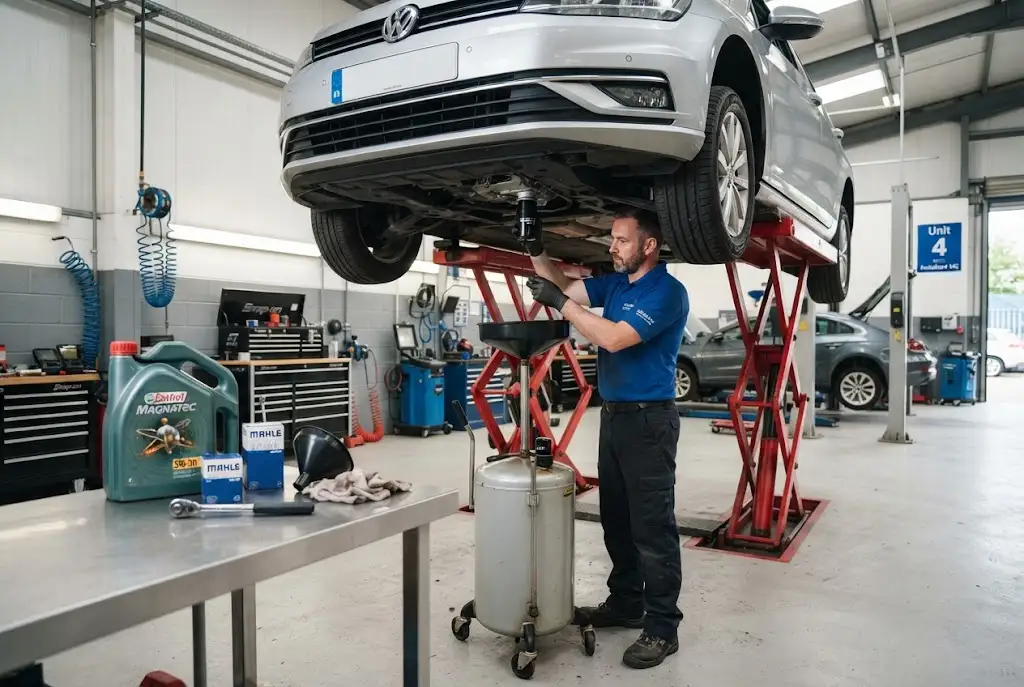
If you are wondering about the oil change and filter cost for your car, the final price can vary considerably depending on the vehicle, engine size, oil specification, garage and location. An engine oil and filter change is one of the most important routine maintenance jobs because fresh oil helps lubricate moving engine components, while a new filter removes dirt and debris from the oil circulation system.
For UK drivers, comparing the price of an oil service is useful, but the cheapest quote is not always the most appropriate option. The correct oil specification, a suitable filter and proper servicing procedures all matter. This guide explains what you can expect to pay, what an oil and filter change includes, what affects the price and when you should consider booking one.
What Is an Oil and Filter Change?
An oil and filter change involves draining the old engine oil, replacing the oil filter and filling the engine with the correct quantity and specification of fresh oil. The process is straightforward, but the correct oil must be selected according to the manufacturer’s requirements for the particular vehicle.
Engine oil gradually becomes contaminated and loses some of its effectiveness as a vehicle is driven. The oil filter is designed to trap contaminants before they continue circulating around the engine. Replacing both together therefore provides a cleaner lubrication system than simply topping up old oil.
For example, a typical car oil and filter change should involve removing the used oil, fitting a suitable new filter, adding the recommended oil and checking the final level. Some garages may also carry out basic visual checks as part of the visit.
How Much Is the Oil Change and Filter Cost in the UK?
There is no single nationwide price for an oil change and filter replacement. Current UK prices vary according to the vehicle and service provider. RAC says its average oil-change price was £192 in one published dataset, while its more recent cost guide reports an average of around £229 for an oil change based on RAC Mobile Mechanics data. These figures demonstrate why it is better to treat published averages as guides rather than fixed prices. RAC’s oil change cost guide also notes that vehicle make, model and recommended oil can affect the final amount.
Garage pricing can differ significantly as well. Halfords currently advertises oil and filter changes from £94.99, although its pricing pages make clear that the price varies by vehicle and location. Its more detailed service information also states that the required oil type and engine size can affect the cost.
As a result, when asking how much is an oil service, it is sensible to request a vehicle-specific quotation rather than relying only on a general advertised starting price.
What Affects Oil Service Cost?
Several factors can influence the amount you pay for an engine oil and filter change. Understanding these factors makes it easier to compare quotations from different garages.
Engine Size
Larger engines can require a greater quantity of oil. More oil can increase the parts cost, particularly when the vehicle requires a premium or specialist specification.
Oil Specification
Not all engine oils are interchangeable. Modern vehicles can require specific viscosity grades and manufacturer approvals. Using the correct oil is therefore more important than simply choosing the cheapest available product.
Vehicle Make and Model
A standard family car may have different servicing requirements from a premium, performance or specialist vehicle. Some vehicles also have more complicated access arrangements, which can increase labour time.
Garage Location
Labour rates vary across the UK. A garage in a major city may have different operating costs from an independent workshop in another area. Mobile servicing can also have a different pricing structure because the technician travels to the vehicle.
Filter Type
The price of the car oil filter depends on the vehicle. A correct-quality filter should be selected for the specific engine rather than choosing a component based solely on price.
Why Replace the Oil Filter at the Same Time?
Some drivers consider changing the oil without replacing the filter. However, the filter is an important part of the lubrication system because it captures contaminants and debris from the oil.
If old oil is drained but a heavily used filter remains installed, contaminants can continue to affect the lubrication system. For this reason, an engine oil and filter change is generally treated as a combined maintenance task.
There are different types of car oil filters, and the correct component depends on the vehicle. Before purchasing an auto oil filter, check the vehicle registration or manufacturer specifications to make sure the replacement part is compatible.
What Is Included in a Car Oil and Filter Change?
A basic oil and filter service normally focuses specifically on the engine’s oil and filter. The technician drains the used oil, removes the existing filter, installs the replacement filter and fills the engine with the required fresh oil.
The final oil level should be checked carefully. Depending on the garage and service package, technicians may also perform basic visual checks or identify other maintenance issues that need attention.
It is important to understand that an oil change is not automatically the same as a comprehensive car service. A dedicated oil and filter service may not include the wider inspections carried out during an interim, full or major service.
Oil Change vs Full Car Service
An oil and filter replacement addresses a specific maintenance requirement, while a full service covers a broader range of vehicle checks. This distinction matters when comparing oil service cost with the price of a complete service.
For example, an interim service may include an engine oil and oil filter replacement alongside checks of components such as brakes, tyres, steering, battery and fluid levels. A full or major service can include additional inspections and replacement items.
If your vehicle is due for its scheduled service, simply booking an oil change may not provide all the checks required by the manufacturer’s maintenance schedule. Check your service history and vehicle handbook before deciding which option you need.
How Often Should You Change Engine Oil and the Filter?
The correct interval depends on the vehicle manufacturer’s recommendations, the type of oil used, driving conditions and how the car is used. Some vehicles have fixed servicing intervals, while others use variable or condition-based service schedules.
High-mileage driving, frequent short journeys, heavy traffic and demanding operating conditions can influence maintenance requirements. Always follow the servicing information specified for your particular vehicle rather than applying one interval to every car.
RAC advises that regular oil changes are important because old oil can lose its ability to protect moving engine components effectively. Its guidance also highlights the importance of following the manufacturer’s recommendations for the vehicle.
Signs Your Car May Need an Oil Change
Some vehicles provide a service reminder or oil-related warning message, but drivers should also pay attention to changes in how the car behaves. Possible signs that maintenance may be due include an overdue service interval, an oil warning light, unusual engine noise or visibly low oil levels.
However, these symptoms should not automatically be treated as proof that an oil change is the only problem. An oil warning light, for example, can indicate a more serious issue that requires prompt investigation.
If you notice a warning light or significant change in engine behaviour, have the vehicle checked rather than simply adding more oil and continuing to drive.
Does Oil and Transmission Change Mean the Same Thing?
No. Engine oil and transmission fluid serve different systems and should not be confused.
An engine oil change concerns the lubrication of the engine. A transmission oil change, where applicable, concerns the gearbox or transmission system. Automatic vehicles can have specific transmission-fluid requirements, and the correct maintenance interval depends on the vehicle and transmission design.
This means that asking a garage for an oil and transmission change should be done carefully. Explain which maintenance work you require and confirm whether you mean engine oil, transmission fluid or both.
Can You Change the Oil Yourself?
Technically, some experienced vehicle owners choose to carry out their own oil changes. However, the job requires suitable equipment, the correct oil and filter, safe access beneath the vehicle and proper disposal of used engine oil.
Used engine oil should never be poured onto the ground, into drains or into household waste. It needs to be handled and disposed of responsibly through an appropriate waste or recycling facility.
For many drivers, using a professional garage or mobile mechanic is more convenient and reduces the risk of incorrect oil selection, leaks or improper disposal.
How to Compare Oil and Filter Change Prices
When comparing quotations, look beyond the headline price. Ask what oil is being used, which filter is included, whether labour and VAT are included and whether the quoted amount applies specifically to your vehicle.
A useful quotation should make it clear whether the service covers:
- Removal of the old engine oil
- Replacement of the oil filter
- The correct quantity of fresh engine oil
- Oil specification suitable for the vehicle
- Labour and applicable taxes
- Basic checks associated with the service
If you are comparing two auto oil changers, ask both providers for the same information. This makes it much easier to identify the genuine difference between the quotations.
How to Keep Your Engine Oil System Healthy
Regular maintenance is the simplest way to protect the engine lubrication system. Check the oil level according to your vehicle manufacturer’s instructions, use the recommended oil specification and keep servicing records up to date.
Do not ignore oil warning lights or assume that topping up the oil permanently solves a low-oil problem. If the level repeatedly drops, the vehicle may have a leak or another mechanical issue that requires investigation.
It is also worth keeping other maintenance work on schedule. For example, brake maintenance, wheel alignment and other brake fluid service requirements are separate from engine oil maintenance and should be handled according to their own service intervals.
Final Thoughts on Oil Change and Filter Cost
The oil change and filter cost in the UK depends on the car, engine size, oil specification, filter, garage and location. Published prices range widely, so a vehicle-specific quotation is the most useful way to establish what you will actually pay.
More importantly, an oil change should not be viewed simply as an expense. Fresh engine oil and a suitable filter help maintain proper lubrication and protect important engine components. Replacing the filter at the same time ensures the new oil is circulating through a clean filtration system.
Before booking, confirm exactly what is included, make sure the oil meets your manufacturer’s requirements and check whether your vehicle is actually due for a wider service. Taking these steps can help you avoid unnecessary costs while keeping routine maintenance on track.
For other vehicle maintenance requirements, you can also explore Magnix’s guides to brake pad and disc replacement, wheel alignment cost and car tracking as part of your wider car maintenance planning.