That faint vibration through the steering wheel at motorway speed, the steering pulling your attention on every drive, is often your wheels asking for attention. Wheel balancing is one of the quickest and most overlooked maintenance jobs on a car, and it is also one of the most commonly confused with wheel alignment. This guide explains what balancing actually does, the warning signs that your wheels need it, how the process works in the workshop, and how it differs from alignment, so you can book the right job with confidence.
What Wheel Balancing Actually Does
No tyre and wheel combination is perfectly uniform. Even on a brand-new wheel, tiny variations in the tyre’s construction and the wheel’s casting mean one spot is slightly heavier than the rest. At town speeds you would never notice. As speed rises, that small imbalance is amplified into a vibration, because the heavier spot pulls the wheel off-centre with every rotation, many times per second.
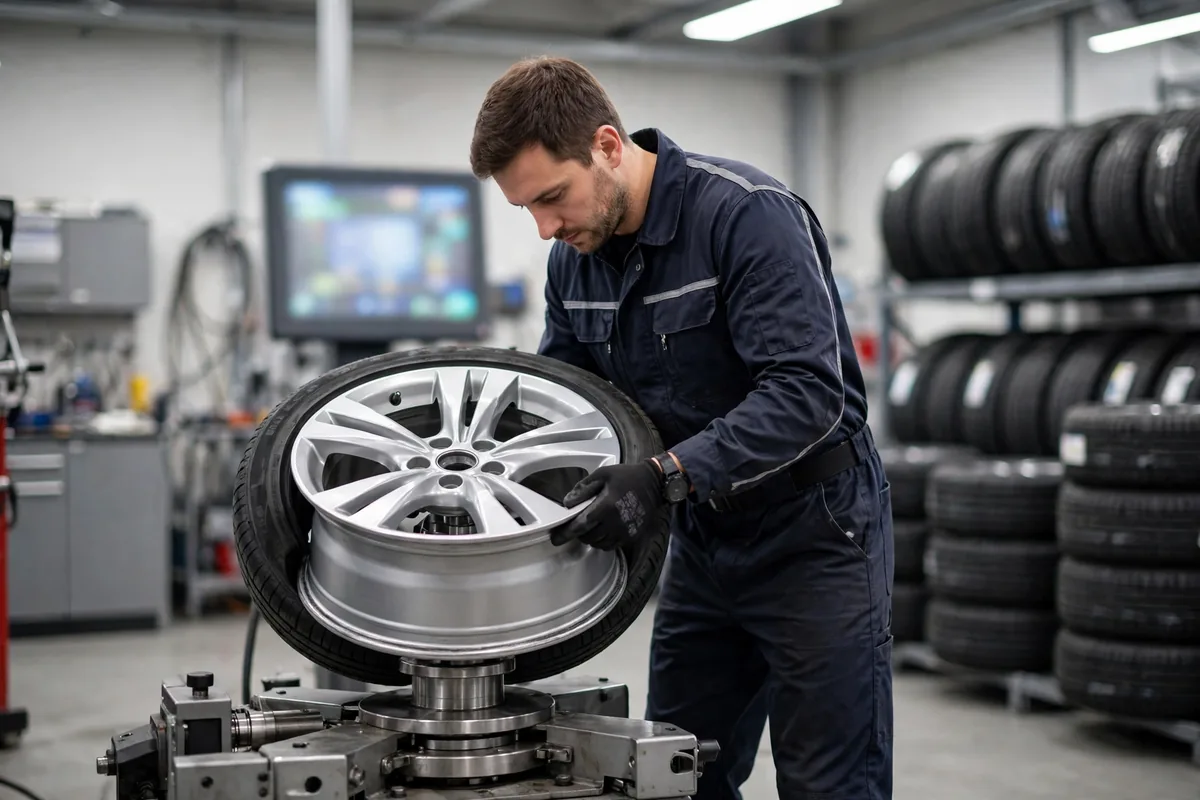
Balancing fixes this by measuring exactly where the heavy spots are and attaching small counterweights to the wheel rim to even them out. Modern balancing machines spin the wheel and pinpoint the imbalance precisely, telling the technician the position and size of weight needed. The weights themselves are small adhesive or clip-on pieces, but their effect on ride comfort and tyre life is anything but small.
Balancing is normally done whenever a tyre is fitted, replaced or repaired, and whenever a wheel is refitted after being removed. It is also worth requesting if vibration appears on a tyre that has been in service for a while, because impacts from potholes and kerbs can knock weights off or shift the tyre’s balance over time.
Signs Your Wheels Need Balancing
The classic sign is vibration through the steering wheel at higher speeds, typically appearing somewhere in the motorway range and sometimes easing again at even higher speeds. Vibration felt through the seat or floor rather than the wheel often points to the rear wheels instead. Either way, speed-dependent vibration is the textbook symptom.
Uneven tyre wear is the second clue. A wheel that runs unbalanced wears its tread unevenly, often in a patchy or scalloped pattern, and shortens the tyre’s life. You might also notice slightly heavier steering feel or a general loss of the smoothness the car had when its tyres were new.
Because these symptoms overlap with other faults, a proper look matters. Combining a balance check with a general once-over, as described in our vehicle inspection guide, helps separate a simple imbalance from worn suspension or steering parts before money is spent.
Wheel Balancing vs Wheel Alignment: The Key Difference
These two jobs are often mentioned in the same breath, and the cluster of terms confuses many drivers. Balancing is about weight distribution around the wheel itself: it stops vibration. Alignment (also called tracking) is about the angles at which the wheels point relative to the car and the road: it stops the car pulling to one side and prevents rapid, one-sided tyre wear.
The symptoms differ too. Vibration suggests balance; pulling, a crooked steering wheel on a straight road, or tyres wearing heavily on one edge suggest alignment. Hitting a kerb or a deep pothole can upset either, and a car can need both jobs at once, but they are performed on different equipment and fix different problems. Our guide to wheel alignment cost explains what alignment involves and what drivers should expect from it.
A useful rule of thumb: if the car shakes, think balance; if the car wanders or scrubs its tyres, think alignment. Mentioning both checks when you book means the technician can confirm which one your car actually needs.
What Happens During a Balancing Appointment
The job is quick. Each wheel is removed and mounted on the balancing machine, which spins it and displays the imbalance. The technician cleans the rim, fits the specified weights, and respins the wheel to confirm the balance is now true. The wheel is then refitted and its nuts torqued correctly, and the process repeats for the remaining wheels.
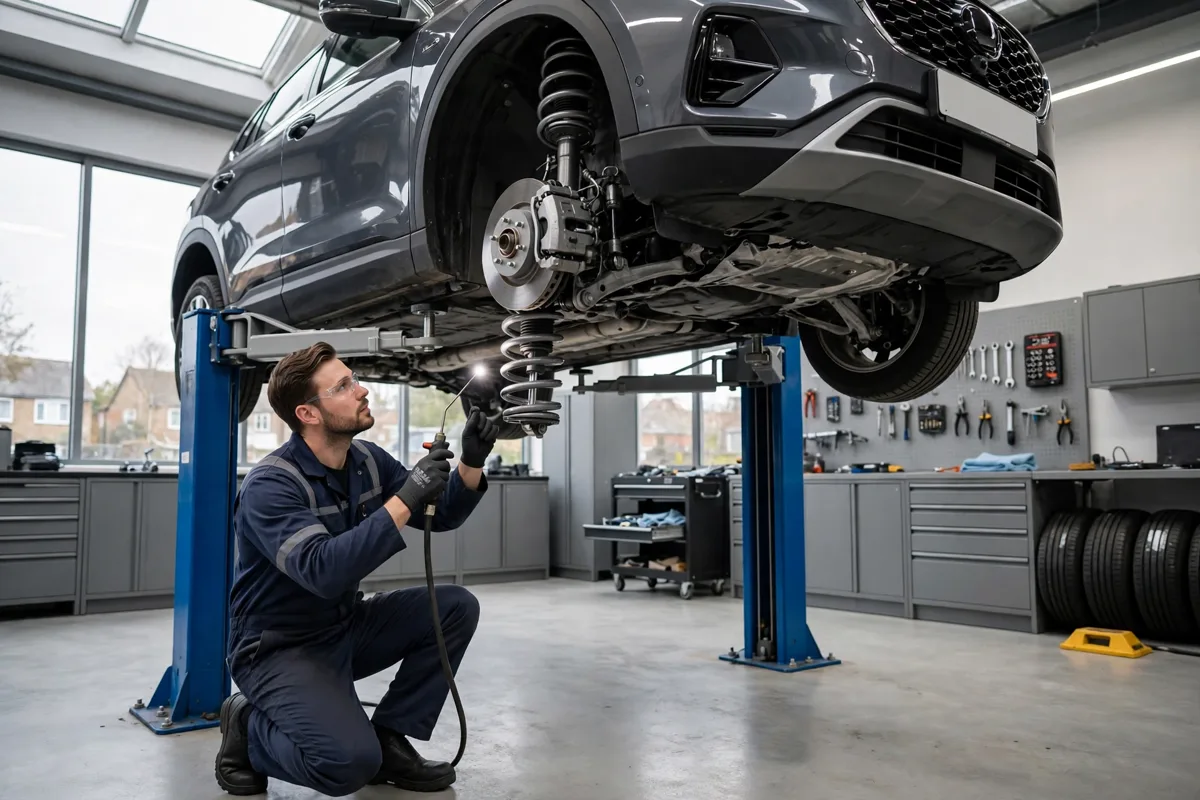
While the wheels are off, it is a natural moment for a visual check of the brakes and tyres. Worn pads are easy to spot with the wheel removed, and our guide to brake pad and disc replacement explains the signs that they are due. Asking the technician to glance at tread depth and tyre condition costs nothing and completes the picture.
A full set of four wheels is normally balanced in well under an hour, which is why the job pairs conveniently with a service or an MOT visit.
How Balancing Protects Tyres and Suspension
An unbalanced wheel does not just annoy the driver; it works the car harder. The constant vibration accelerates wear on wheel bearings, shock absorbers and steering components, and the tyre itself wears unevenly and faster. Over a set of tyres, that can mean replacing them noticeably earlier than their tread life should allow.
Suspension components are designed to absorb road impacts, not a continuous shaking at every journey. Keeping wheels balanced is one of the cheap preventive steps that supports the more expensive parts, in the same way that timely attention to the items in our car suspension repair guide prevents small knocks becoming big bills.
There is a comfort and safety angle as well. A car that vibrates at cruising speed is tiring to drive on long journeys, and severe imbalance can mask the feel of other developing faults that a driver would otherwise notice early.
How Often Should You Get Wheels Balanced?
There is no fixed interval in most service schedules, so work by triggers. Book a balance when new tyres are fitted (it should be included), after a puncture repair, after a significant pothole or kerb strike, and whenever speed-related vibration appears. Many drivers also have balance checked when tyres are rotated or at an annual service, which catches slow-developing imbalance before it damages tread.
Combining the check with your yearly test visit is efficient: our guide to how much an MOT costs explains how drivers commonly bundle small jobs around the annual inspection.
Wheel balancing is inexpensive, fast and quietly protective. If your car vibrates at speed, wears its tyres unevenly or simply has not had its wheels checked since the tyres were fitted, book it in. The difference on the next motorway drive will tell you it was money well spent.