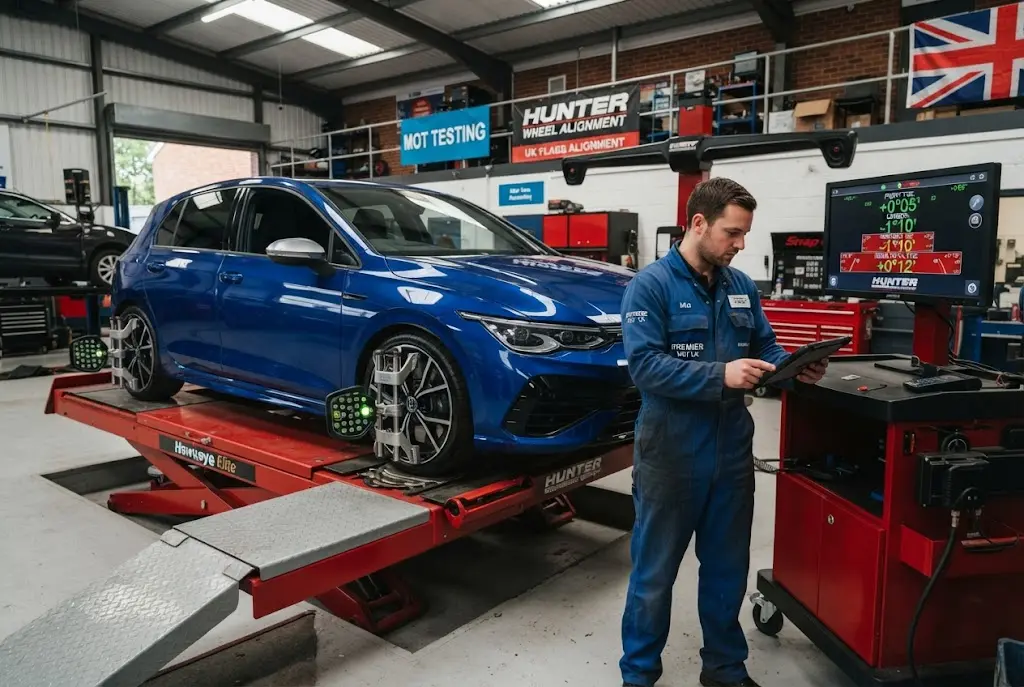
If your car pulls to one side, the steering wheel no longer sits straight or your tyres are wearing unevenly, you may need a wheel alignment check. Understanding the wheel alignment cost can help you compare garage quotes and identify what is included in the service.
Wheel alignment adjusts the angles of the wheels so they meet the manufacturer’s specifications. Correct alignment can help maintain predictable handling, reduce uneven tyre wear and ensure the steering system behaves as intended. The price varies according to the type of alignment required, the vehicle, the garage and your location.
What Is Wheel Alignment?
Wheel alignment is the process of checking and, where necessary, adjusting the angles of a vehicle’s wheels. These angles are commonly described as camber, caster and toe. The correct settings vary between vehicles and are specified by the manufacturer.
Although people often refer to the service as tyre alignment or tracking, wheel alignment concerns the positioning and geometry of the wheels and suspension. Tracking is often used in everyday UK garage terminology for toe adjustment, but a complete alignment check can involve more than simply adjusting the front toe settings.
Modern alignment equipment measures the wheels and compares their positions with the appropriate specifications. The technician can then determine whether adjustment is required.
How Much Does Wheel Alignment Cost in the UK?
The wheel alignment cost varies significantly between garages and according to the type of alignment being performed. A basic front-wheel alignment can cost less than a full four-wheel alignment, while specialist vehicles or vehicles requiring additional adjustments may cost more.
As a broad UK market guide, many garages advertise wheel alignment or tracking services from around £30 to £100, while more comprehensive four-wheel alignment services can cost more depending on the vehicle and equipment used. Prices can also differ between independent garages, national chains and specialist tyre centres.
Because prices change by location and vehicle, it is better to request a vehicle-specific quotation than rely on one nationwide figure. When comparing the wheel alignment price, ask whether the quoted amount includes measurement only or both measurement and adjustment.
What Affects Wheel Alignment Price?
Several factors can influence the final wheel alignment charges.
Two-Wheel or Four-Wheel Alignment
Some vehicles require alignment checks and adjustments at the front axle, while others benefit from a complete four-wheel alignment. The appropriate service depends on the vehicle’s suspension and manufacturer’s specifications.
A four-wheel alignment can involve more measurements and adjustments, so it may cost more than a basic front-end tracking service.
Vehicle Type
Different vehicles have different suspension designs and alignment specifications. Performance cars, premium vehicles and models with adjustable rear suspension can require more detailed work.
Garage and Location
Labour rates vary throughout the UK. A specialist alignment centre may also charge more than a general workshop because of its equipment and expertise.
Required Adjustments
Checking alignment and adjusting it are not always the same thing. If measurements show that the wheels are already within specification, the technician may simply confirm that the alignment is acceptable.
If adjustment is necessary, the final price may depend on how accessible the relevant adjustment points are and whether any components are damaged or seized.
How Much Is a Wheel Alignment Check?
Drivers often ask how much is a wheel alignment when they notice a handling issue. Some garages offer alignment checks separately, while others include measurement as part of an alignment service.
A check can be particularly useful after hitting a pothole or kerb, replacing suspension components or noticing abnormal tyre wear. The measurement can identify whether the wheel angles remain within the manufacturer’s recommended range.
Always clarify whether the garage’s advertised price covers an inspection only or includes adjustment where necessary. This distinction can make two apparently similar quotations quite different.
Signs Your Car May Need Wheel Alignment
Alignment problems do not always produce an obvious symptom. However, several signs can indicate that your vehicle should be inspected.
Steering Wheel Is Off-Centre
If the steering wheel sits noticeably to one side while the vehicle is travelling straight on a suitable road, alignment may need checking. An off-centre steering wheel can have other causes as well, so a proper inspection is important.
Car Pulls to One Side
A vehicle that consistently drifts or pulls left or right can have an alignment issue. However, tyre pressure, road camber and suspension problems can also influence the way a car tracks.
Uneven Tyre Wear
Unusual wear on the inside or outside edge of a tyre can indicate incorrect wheel geometry. Regularly inspecting your tyres can help identify problems before excessive wear develops.
Steering Feels Unusual
If the steering feels different from normal, particularly after an impact with a pothole or kerb, an alignment check can help determine whether the wheel geometry has changed.
Wheel Alignment and Steering Wheel Position
The relationship between wheel alignment and steering wheel position is important. When the wheels are correctly aligned and the steering system is centred, the steering wheel should normally sit in an appropriate straight-ahead position when the vehicle is travelling straight.
If the steering wheel remains crooked after an alignment, the technician may need to investigate whether the alignment procedure was completed correctly or whether another steering or suspension issue exists.
A steering wheel that is off-centre should not automatically be treated as proof of an alignment problem. A professional measurement is the better way to establish the cause.
Wheel Alignment and Balancing: What Is the Difference?
Wheel alignment and balancing are two different services that are sometimes confused.
The Wheel alignment concerns the angles and geometry of the wheels relative to the vehicle and road. Wheel balancing concerns the distribution of weight around the wheel and tyre assembly.
An imbalance can cause vibration, particularly at certain speeds, while poor alignment can contribute to steering issues and uneven tyre wear. A vehicle can therefore require balancing, alignment or both depending on the symptoms.
For this reason, wheel alignment wheel balancing should not be treated as interchangeable terms when booking a garage service.
What Is Wheel Alignment and Tracking?
The phrase wheel alignment and tracking cost can be confusing because garages sometimes use the terms differently.
Tracking traditionally refers to adjusting the toe angle of the wheels. Wheel alignment can be a broader process involving several geometric measurements. Some garages advertise tracking as a basic alignment service, while others offer comprehensive four-wheel alignment using specialist equipment.
Before booking, ask the garage exactly what its tracking or alignment package includes. This will help you compare like-for-like prices.
Front Suspension Alignment vs Rear Suspension Alignment
Front suspension alignment is particularly important because the front wheels are directly involved in steering. However, the rear axle also affects the vehicle’s overall geometry.
Some vehicles allow adjustments to the rear suspension alignment, while others have limited factory adjustment. A complete alignment measurement can reveal whether the rear wheels are positioned correctly relative to the vehicle.
This is why a rear suspension alignment check can be relevant even when the driver initially notices a problem through the steering wheel.
When Should You Get a Wheel Alignment Check?
You should consider an alignment check after a significant impact with a pothole or kerb, after certain suspension repairs or when unusual tyre wear appears.
It can also be sensible to check alignment when fitting new tyres if the existing tyres show uneven wear. Correcting an alignment issue can help prevent the replacement tyres from developing the same pattern.
However, wheel alignment is not necessarily required at every tyre change. The appropriate approach depends on the vehicle’s condition and whether measurements indicate that adjustment is needed.
Can Wheel Alignment Be Checked for Free?
Some garages and tyre retailers occasionally advertise a free wheel alignment check or free alignment inspection as part of a promotion. However, promotional availability changes, and a free check may not mean that any required adjustment is included.
If you see an offer for free tyre alignment or a free alignment check, read the terms carefully. Confirm what measurements are included and how much any subsequent adjustment will cost.
The same applies to phrases such as wheel alignment offers. A low advertised price may apply only to a specific axle, vehicle or promotional period.
What Is Four-Wheel Alignment?
A four-wheel alignment measures the geometry of all four wheels and considers their relationship with the vehicle. It can be particularly useful on cars with independent rear suspension or adjustable rear alignment settings.
Some garages refer to this as pro 4 wheel alignment or use proprietary names for their alignment systems. The important point is not the marketing name but whether the service measures and adjusts the relevant angles according to the vehicle’s specifications.
Specialist alignment equipment can provide detailed measurements and help technicians identify deviations from the manufacturer’s settings.
Wheel Alignment After Brake or Suspension Work
Wheel alignment can become relevant after certain suspension or steering repairs because changing components can affect wheel geometry.
However, not every brake repair automatically requires alignment. For example, replacing brake pads and discs does not normally mean that the wheel alignment settings have changed. If suspension or steering components have been removed, replaced or adjusted, an alignment check may be more appropriate.
If your vehicle has recently received a brake pad and disc replacement, ask the technician whether any additional inspection is necessary based on the work performed rather than automatically paying for an unrelated service.
How to Reduce Unnecessary Alignment Costs
The easiest way to avoid unnecessary spending is to have the vehicle properly diagnosed before paying for adjustments. Do not assume that every steering or tyre problem is caused by alignment.
Check tyre pressures first and inspect the tyres for visible damage or abnormal wear. If the problem appeared after hitting a pothole or kerb, tell the technician about the impact because suspension or steering damage may also need to be investigated.
When comparing garages, ask whether the price includes measurement, adjustment and a final verification. A clear quotation can help avoid unexpected charges.
Wheel Alignment Cost: What Should Be Included?
Before accepting a quote, establish exactly what you are paying for. Depending on the garage, an alignment service may include:
- Initial wheel geometry measurements
- Comparison against vehicle specifications
- Adjustment of applicable alignment angles
- Steering-centre verification
- Final measurement after adjustment
- A printed or digital alignment report at some specialist centres
If a garage quotes separately for measurement and adjustment, ask for the complete expected price before authorising the work.
Final Thoughts on Wheel Alignment Cost
The wheel alignment cost in the UK depends on the vehicle, alignment type, garage, location and adjustments required. Basic tracking services can be relatively inexpensive, while comprehensive four-wheel alignment can cost more.
The most important consideration is not simply finding the lowest wheel alignment price. The service should measure the relevant wheel angles accurately and make appropriate adjustments using the manufacturer’s specifications.
If your car pulls to one side, the steering wheel is off-centre or your tyres are wearing unevenly, an alignment inspection can help identify whether wheel geometry is responsible. Likewise, after a significant pothole or kerb impact, checking the steering and suspension can be worthwhile.
Keeping wheel geometry correct is only one part of vehicle maintenance. Drivers should also stay on top of essential servicing such as oil and filter changes, brake fluid maintenance and other braking-system inspections.
For vehicles that require a more specific tracking assessment, understanding car tracking can also help you determine whether a basic tracking service or a more comprehensive wheel alignment is appropriate.