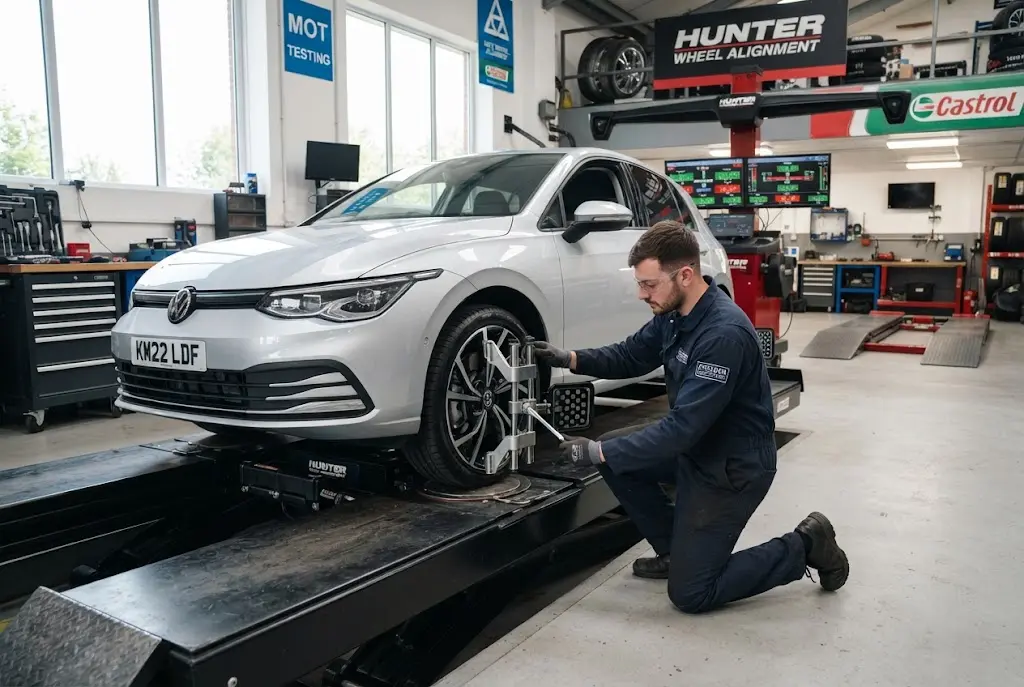
Car tracking is a common UK term for adjusting the alignment of a vehicle’s wheels, particularly the toe angle. Correct tracking can help maintain stable handling, reduce uneven tyre wear and keep the steering system operating as intended. If your car pulls to one side, the steering wheel sits off-centre or your tyres are wearing unevenly, a tracking or alignment check may be worthwhile.
The car tracking cost varies according to the vehicle, garage, location and type of alignment service required. Some garages offer basic front tracking, while others use specialist equipment to measure all four wheels and compare their geometry with the manufacturer’s specifications. Understanding the difference can help you choose the right service instead of paying for work your vehicle may not need.
What Is Car Tracking?
Car tracking generally refers to checking and adjusting the toe alignment of the wheels. Toe describes the direction in which the wheels point when viewed from above. If the toe setting is outside the manufacturer’s recommended range, the vehicle may not track correctly on the road.
Although the terms are sometimes used interchangeably, tracking is not necessarily the same as a complete wheel alignment. A comprehensive alignment service can measure several wheel-geometry angles, including toe, camber and caster where applicable.
This distinction is important when comparing garage services. A low-priced tracking service may cover only a specific adjustment, whereas a full alignment can involve measurements across the vehicle.
How Much Does Car Tracking Cost?
The car tracking cost depends on the vehicle and the type of service being provided. Basic tracking can be relatively inexpensive, while a comprehensive four-wheel alignment can cost more because it involves additional measurements and adjustments.
UK garages and tyre centres may advertise tracking from relatively low starting prices, but promotional prices can apply only to certain vehicles or specific axle adjustments. Before booking, ask whether the quoted price includes both the alignment measurement and any adjustment that is required.
A vehicle-specific quotation is more useful than relying on a general advertised price. Give the garage your registration number or exact make and model so it can identify the appropriate alignment specifications and equipment requirements.
Car Tracking and Wheel Alignment: What’s the Difference?
Tracking and wheel alignment are closely related, but they do not always describe exactly the same service.
Tracking is commonly associated with adjusting toe angles. Wheel alignment can be a broader inspection of the vehicle’s wheel geometry. Depending on the car, a full alignment may involve checking the front and rear wheels and measuring several angles against manufacturer specifications.
Therefore, when asking for wheel tracking and alignment, clarify what the garage means by the service. If your vehicle has adjustable rear suspension, for example, a four-wheel alignment may provide information that a basic front tracking service does not.
Signs Your Car May Need Tracking
Several symptoms can indicate that your car should have its alignment checked. However, these symptoms can also have other causes, so a proper inspection is necessary before deciding that tracking is the solution.
The Car Pulls to One Side
If your vehicle consistently moves towards the left or right when travelling on a suitable, reasonably level road, incorrect wheel geometry is one possible cause.
Tyre pressure, road surface camber, suspension problems and tyre condition can also affect the way a vehicle moves. A technician should therefore investigate the complete situation rather than automatically adjusting the tracking.
The Steering Wheel Is Off-Centre
An off-centre steering wheel can be associated with alignment problems. If the car travels straight but the steering wheel remains noticeably turned, an alignment check can help determine whether the wheel geometry needs adjustment.
Uneven Tyre Wear
Incorrect alignment can contribute to abnormal tyre wear. Inspect the inner and outer edges of your tyres regularly, particularly if the wear pattern appears different from one side of the vehicle to the other.
Uneven wear should not automatically be blamed on tracking. Incorrect tyre pressure, worn suspension components and other mechanical problems can also contribute to unusual tyre wear.
Recent Pothole or Kerb Impact
A significant impact with a pothole or kerb can potentially alter wheel geometry or damage suspension and steering components. If your car behaves differently after an impact, having the relevant systems inspected is sensible.
How Much Is Tracking for a Car?
The question how much is tracking for a car does not have one universal answer. The price depends on whether the garage is providing basic tracking or a more comprehensive alignment service.
Front tracking can be cheaper because it may involve a narrower range of measurements and adjustments. A four-wheel alignment can cost more because the technician measures the relationship between the front and rear wheels and may adjust multiple settings.
When requesting a quote, ask three simple questions: what wheels will be measured, what adjustments are included and whether the final alignment will be checked after adjustment. These questions make it easier to compare prices from different garages.
What Happens During Car Tracking?
A professional tracking service normally begins with an inspection of the vehicle and tyres. The technician then positions the vehicle on suitable alignment equipment and attaches measuring devices to the wheels.
The equipment measures the relevant wheel angles and provides readings that can be compared with the vehicle’s recommended specifications. If the toe setting is outside the permitted range and adjustment is available, the technician can make the required changes.
After adjustment, the alignment should be checked again to confirm that the settings are within the appropriate range.
If the readings cannot be corrected normally, the technician may need to investigate worn or damaged steering and suspension components rather than simply continuing to adjust the alignment.
Car Tracking Alignment and Tyre Wear
Correct car tracking alignment can be important for tyre longevity because incorrect wheel geometry can cause the tyres to scrub against the road surface in an abnormal way.
If the tyres are already showing severe uneven wear, correcting the alignment will not restore the worn rubber. However, identifying and correcting the underlying alignment issue can help prevent the replacement tyres from developing the same problem.
Drivers should therefore check their tyre condition regularly and investigate unusual wear rather than waiting until the tread becomes dangerously low.
Tyre Alignment vs Wheel Alignment
The phrase tyre alignment is commonly used by drivers, but technically the alignment concerns the wheels and suspension geometry rather than adjusting the tyres themselves.
The tyre is mounted to the wheel, while alignment settings determine how the wheel sits relative to the vehicle and road. A technician therefore measures and adjusts the vehicle’s alignment settings rather than changing the tyre’s physical shape or construction.
If a tyre is damaged, incorrectly inflated or unevenly worn, those issues need to be addressed separately.
Car Wheel Alignment Tracking: When Do You Need a Full Alignment?
Car wheel alignment tracking may involve anything from a basic toe adjustment to a comprehensive alignment check, depending on the garage and vehicle.
A full alignment can be particularly useful when:
- The vehicle has adjustable front and rear alignment settings.
- Tyres are wearing unevenly.
- The steering wheel is noticeably off-centre.
- The car pulls or drifts unexpectedly.
- The vehicle has recently experienced a significant pothole or kerb impact.
- Steering or suspension components have been replaced.
- A previous tracking adjustment has not resolved the handling problem.
A full alignment measurement can help establish whether the problem is limited to toe or whether other wheel-geometry settings also need attention.
Tracking After Suspension or Steering Repairs
Alignment can become particularly relevant after certain steering or suspension repairs. Replacing or adjusting components can affect the geometry of the wheels.
For example, if suspension components have been replaced, an alignment check may help confirm that the wheels are positioned correctly according to the manufacturer’s specifications.
However, not every repair requires tracking. The technician should determine whether the work performed could affect alignment before recommending an additional service.
Car Tracking vs Wheel Balancing
Car tracking and wheel balancing address different problems. Tracking concerns wheel geometry, while balancing concerns the distribution of weight around the wheel and tyre assembly.
A vehicle with an unbalanced wheel may develop vibration at particular speeds. A vehicle with incorrect alignment may show steering problems or uneven tyre wear. It is possible for a car to need one service without needing the other.
If your main symptom is vibration rather than pulling, drifting or uneven tyre wear, ask the garage to diagnose the problem before paying specifically for tracking.
Can You Track a Car Yourself?
Basic alignment adjustments can technically be performed by experienced mechanics using suitable equipment, but accurate vehicle alignment is not simply a matter of measuring one distance between two tyres.
Professional alignment equipment can measure wheel geometry precisely and compare the results with vehicle-specific specifications. Some vehicles also have complicated suspension systems where incorrect adjustments can affect handling and tyre wear.
For most drivers, using a professional garage or specialist alignment centre is the more practical approach. This is particularly important if the vehicle has recently suffered an impact or has another steering or suspension issue.
How to Compare Car Tracking Services
When comparing car tracking services, do not choose solely on the lowest advertised price. Ask what the garage actually measures and adjusts.
A useful quotation should make clear:
- Whether the service covers the front axle or all four wheels.
- Whether measurement is included.
- Whether adjustment is included.
- Whether the vehicle’s manufacturer specifications are used.
- Whether a final measurement is performed after adjustment.
- Whether additional repairs will be recommended if alignment cannot be corrected.
This information can help you distinguish a basic tracking service from a more comprehensive wheel alignment.
Can Tracking Fix Every Steering Problem?
No. Tracking can correct certain alignment problems, but it cannot repair worn or damaged mechanical components.
If a vehicle has worn suspension bushes, damaged steering components, a bent wheel or another mechanical fault, adjusting the toe angle may not solve the underlying problem. In some cases, attempting to compensate for damaged components through alignment adjustments can produce an unsatisfactory result.
A good technician should therefore inspect the vehicle and identify any obvious mechanical issues before carrying out alignment adjustments.
Car Tracking and Other Vehicle Maintenance
Tracking is one part of a broader vehicle maintenance schedule. Drivers should also keep up with routine servicing, braking-system maintenance and tyre checks.
For example, if you are experiencing braking problems alongside steering or handling issues, a separate brake pad and disc replacement assessment may be necessary. Brake components and wheel alignment are separate systems, so one service should not be assumed to resolve the other.
Likewise, keeping your engine maintenance up to date through an oil change and filter replacement helps address a completely different area of vehicle maintenance.
If your car’s wheel geometry needs checking, you can also review our guide to wheel alignment cost to understand the difference between tracking and broader alignment services.
Final Thoughts on Car Tracking
Car tracking is commonly used to describe the checking and adjustment of wheel toe alignment. It can be useful when a vehicle pulls to one side, the steering wheel is off-centre or tyres are developing uneven wear.
The car tracking cost depends on the vehicle, garage, location and scope of the service. A basic tracking adjustment may cost less than a complete four-wheel alignment, so drivers should always confirm exactly what a quotation includes.
Tracking should also be treated as a diagnostic and maintenance service rather than a guaranteed solution to every handling problem. If alignment cannot be brought within specification, worn suspension, steering components or other mechanical issues may need investigation.
Before booking, ask whether the garage is offering basic tracking or a full alignment, whether the manufacturer’s specifications are being used and whether adjustment and final measurement are included. That will give you a clearer idea of what you are paying for and whether the service matches your vehicle’s needs.