If your car knocks over bumps, feels loose in corners, or wears its tyres unevenly, car suspension repair may restore calm, safe handling. For UK drivers, the problem often starts quietly. However, worn parts can affect steering, braking and comfort on every journey. Therefore, spotting the early signs matters far more than ignoring the noise.
This guide explains what the system does, which parts wear out, and what a garage will check. In addition, it covers the signs that need prompt attention and the link with the MOT test. Moreover, it explains the factors that shape the final bill.
What Is Car Suspension?
Put simply, what is car suspension? It is the system that links the wheels to the rest of the car. Moreover, drivers who ask what is a suspension system in a car usually want one clear answer. In short, the suspension of a vehicle supports the car, absorbs bumps and keeps the tyres on the road.
The vehicle suspension system also helps the car stay stable when you brake, accelerate or turn. Therefore, a healthy suspension system in car design is central to safety, not just comfort.
Car Suspension Repair: What the System Actually Does
Good car suspension repair starts with understanding the job the system does every day. First, the system carries the weight of the car and its passengers. Secondly, it absorbs shocks from potholes, speed bumps and uneven surfaces. Finally, it controls body movement, so the car does not roll, dive or bounce excessively.
In addition, the system keeps each tyre pressed firmly against the road surface. Consequently, the driver keeps better steering control in normal and emergency conditions. For example, a worn damper may let the car bounce after a bump. As a result, the tyre may lose contact briefly, and handling may feel vague.
Main Car Suspension Components
The main car suspension components work as a team, so one worn part can strain the others. In practice, garages check the full corner of the car, not just the noisy part.
Springs
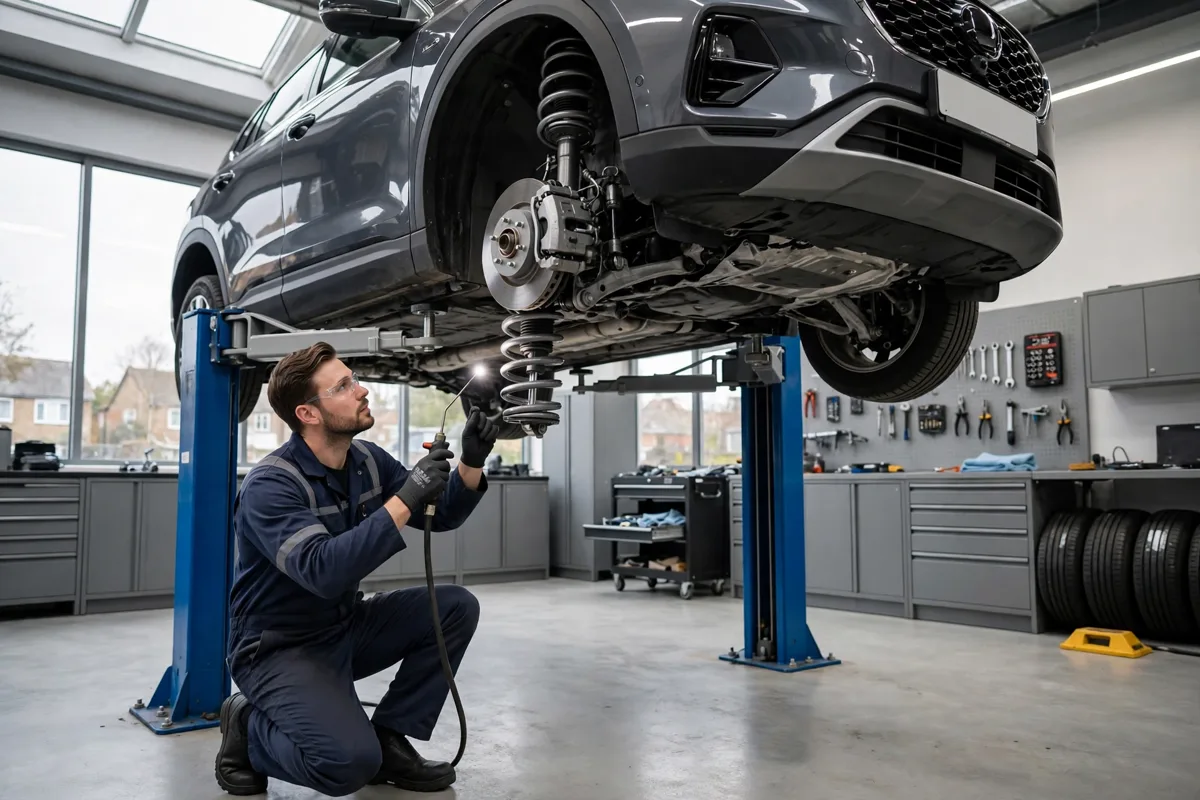
Springs support the weight of the car and absorb larger road movements. Most cars use coil springs, which sit around or beside the damper. However, a broken spring can change the ride height on one side. Therefore, the car may sit unevenly, and the tyre may wear faster.
Shock Absorbers and Struts
Shock absorbers control how quickly the spring moves after a bump. Similarly, struts combine a damper with a structural part of the suspension. When these parts weaken, the car may bounce, sway or nose-dive under braking. Moreover, leaking fluid on a damper body is a clear sign for inspection.
Control Arms, Bushes and Ball Joints
Control arms link the wheel hub to the car body or subframe. Meanwhile, rubber bushes let those arms move while limiting noise and vibration. Ball joints allow movement for steering and suspension travel. Consequently, worn bushes or joints can cause knocking, looseness and uneven tyre wear.
Anti-Roll Bar and Links
The anti-roll bar helps limit body roll when the car turns. Small links connect the bar to the rest of the suspension. Because these links work hard, they can wear and start to knock. In many cases, the noise appears first on rough or uneven roads.
Signs Your Car Needs Suspension Repair
Most suspension repair jobs begin with a symptom the driver notices during normal use. However, symptoms can overlap with tyre, steering or brake problems. Therefore, a garage should diagnose the cause before replacing any parts. The signs below deserve attention, especially when they appear together.
Knocking or Clunking Noises
A knock over bumps often points to a worn bush, link or ball joint. Alternatively, a broken spring or worn top mount can also cause noise. For example, the sound may grow louder at low speed on rough roads. In short, new noises rarely fix themselves, so book an inspection promptly.
Uneven Tyre Wear
Uneven tyre wear can follow worn parts or incorrect wheel alignment. In particular, wear on one edge may suggest the wheel no longer sits correctly. Moreover, damaged suspension can change the angles that guide the tyre. Our guide to wheel alignment cost in the UK explains those checks in more detail.
Poor Handling and Pulling
The car may feel loose, floaty or slow to settle after a bump. Similarly, it may roll more in corners or pull to one side. However, tyre pressures and alignment can cause similar symptoms. Therefore, the garage should check the basics before it confirms a suspension fault.
Extra Bounce and Nose-Dive
A healthy car settles quickly after you push down on a corner. By contrast, repeated bouncing suggests the dampers no longer control the springs well. The front may also dive sharply when you brake. As a result, stopping and steering can feel less stable than usual.
Suspension Repair and the MOT Test
Suspension condition matters during the MOT test because testers check key safety parts. For instance, they inspect springs, dampers, mounts, joints and bushes for wear or damage. Consequently, a seriously worn component can lead to a test failure. You can read the official overview of getting an MOT on GOV.UK for the wider test process.
In addition, minor wear may appear as an advisory rather than a failure. However, an advisory still gives you useful warning before the part worsens. Our explainer on MOT cost in the UK helps you plan the test itself. Therefore, treat suspension advisories as a prompt, not as background paperwork.
What a Garage Checks During Car Suspension Repair
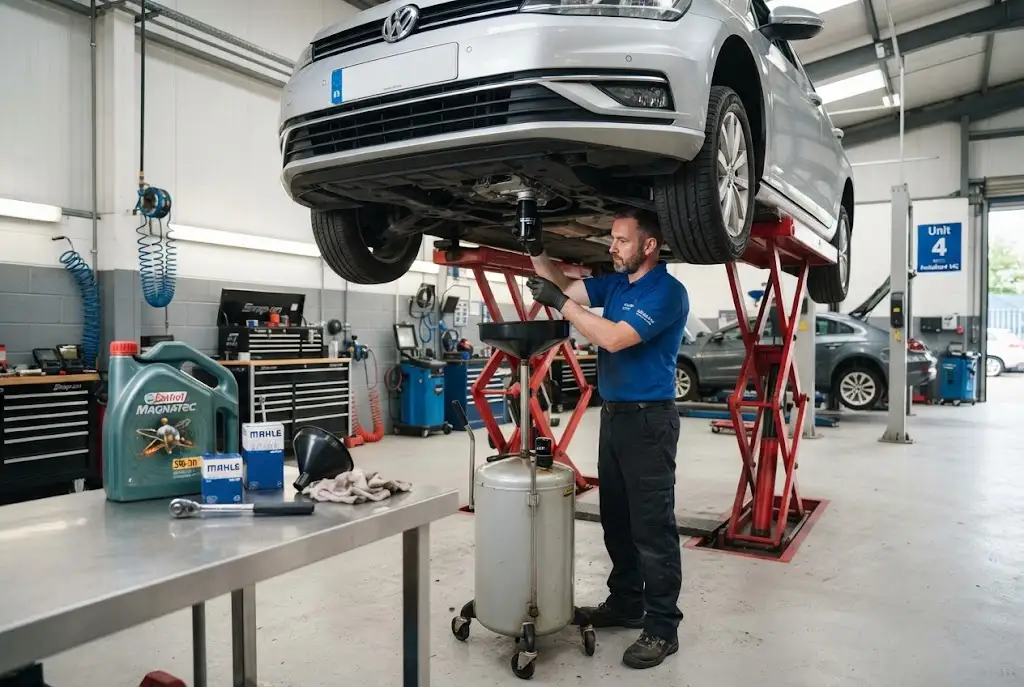
A careful garage starts with your description of the symptom and a road test. Next, the technician lifts the car and inspects each corner safely. In practice, a thorough check for car suspension repair usually includes the following steps.
- First, the technician checks ride height and looks for a broken or weak spring.
- Secondly, the technician inspects dampers for leaks, damage and weak control.
- Moreover, the technician tests bushes, ball joints and links for excess movement.
- In addition, the technician checks wheel bearings, steering parts and tyre wear.
- Finally, the technician confirms the fault and explains which parts need replacement.
A broader vehicle inspection guide shows how these checks fit into overall car condition. After the inspection, the garage should explain the findings in plain language. Moreover, it should separate urgent work from items that need monitoring. As a result, you can approve the right suspension repair with confidence.
What the Repair Job Involves
The exact job depends on which part has failed and where it sits. For example, a drop link may be a contained job on one corner. By contrast, a strut replacement can involve more strip-down and related parts. Therefore, the garage may also inspect the top mount and nearby fixings.
Technicians often replace dampers or springs in pairs across the same axle. In practice, this approach helps both sides behave in a balanced way. After the repair, the garage should road-test the car carefully. Furthermore, many repairs need an alignment check because the geometry may have changed.
Before you collect the car, ask what parts the garage replaced and whether it checked alignment. Finally, keep the invoice, because it records the parts and date clearly.
What Affects Suspension Repair Cost?
Many drivers search for suspension repair cost before they book a garage visit. However, no honest guide can quote an exact figure without seeing the car. The car suspension repair cost depends on the part, the vehicle and the labour involved. Therefore, treat any quote as specific to your car and its condition.
Several factors shape the final bill, and each factor is easy to ask about. For example, a premium or larger vehicle may use more complex parts. Meanwhile, seized fixings or extra damage can increase the labour time. The factors below usually matter most in a quote.
- The type of vehicle, its age and its suspension design.
- The failed part and whether the garage replaces it as a pair.
- Labour time, access to the part and any seized or damaged fixings.
- Additional parts, such as mounts, bushes or links found during inspection.
- Wheel alignment after the repair, where the job requires it.
- The quality and source of the replacement parts the garage fits.
Our wider car repair cost guide for UK drivers explains how quotes are built. In short, ask for an itemised quote before you approve the work. Moreover, ask the garage to call you if it finds extra faults. As a result, you keep control of the cost without delaying urgent repairs.
Front Suspension on a Car vs the Rear
The front suspension on car models usually works harder because it also steers. Consequently, front parts can affect both ride comfort and steering feel. In addition, engine weight often sits over the front axle on many cars. Therefore, front knocking or looseness may show up quickly through the wheel.
The rear suspension still matters for stability, tyre wear and passenger comfort. For instance, worn rear dampers can make the car feel unsettled on bends. Moreover, rear bushes can knock and change how the car tracks. In short, a complete suspension car check should cover both ends.
When to See a Garage Promptly
Some signs can wait for a routine appointment, but others need prompt action. For example, book quickly if the car sits much lower on one side. Similarly, seek help if steering feels loose or the car pulls sharply. Moreover, a loud knock after a pothole impact deserves an early check.
Stop driving and seek advice if the car feels unstable or unsafe. In particular, a broken spring can damage nearby parts or a tyre. Therefore, do not rely on short, careful trips to solve the problem. Instead, follow the garage advice on whether the car is safe to drive.
Regular servicing also helps you catch wear before it becomes a bigger job. Our car maintenance schedule for UK drivers explains sensible service intervals. In addition, tell the garage about noises or handling changes at each visit. Consequently, small suspension issues can stay small and manageable.
Final Thoughts on Car Suspension Repair
Car suspension repair is about far more than stopping an annoying knock. In summary, the system protects comfort, grip, steering control and tyre life. Therefore, drivers should treat clear signs of wear as safety information.
If your car bounces, knocks, pulls or wears its tyres unevenly, book a check. Moreover, ask the garage to explain the failed part in plain terms. Finally, confirm whether alignment and follow-up checks form part of the job. As a result, you will leave with a car that feels composed and predictable.