Beauty SEO helps brands, retailers, salons, publishers and beauty businesses become easier to discover through search engines. Whether a customer is searching for a skincare product, a local beauty service, a makeup recommendation or information about a particular ingredient, search visibility can influence which businesses they discover and consider.
The beauty market is highly competitive, which makes a focused search strategy particularly important. Publishing large quantities of generic content is rarely enough. A stronger approach combines search intent, keyword research, useful content, technical optimisation, internal linking, authoritative references and a clear understanding of what UK beauty audiences actually want.
What Is Beauty SEO?
Beauty SEO is the process of improving a beauty-related website so that relevant pages can be discovered and understood by search engines while remaining useful to real visitors.
It can apply to many types of businesses and websites, including skincare brands, cosmetics retailers, haircare companies, salons, beauty publishers, ecommerce stores and professional beauty services.
A successful strategy considers more than individual keywords. It connects related subjects into a logical content structure so that a website can demonstrate useful coverage of its chosen beauty topics.
Why Beauty SEO Matters for UK Businesses
Beauty customers often research before they buy. Someone may search for a product comparison, investigate ingredients, read reviews, compare prices or look for a nearby retailer before making a decision.
This creates opportunities at several stages of the customer journey. Informational content can attract people who are researching a problem, while category and product pages can serve users who are closer to making a purchase.
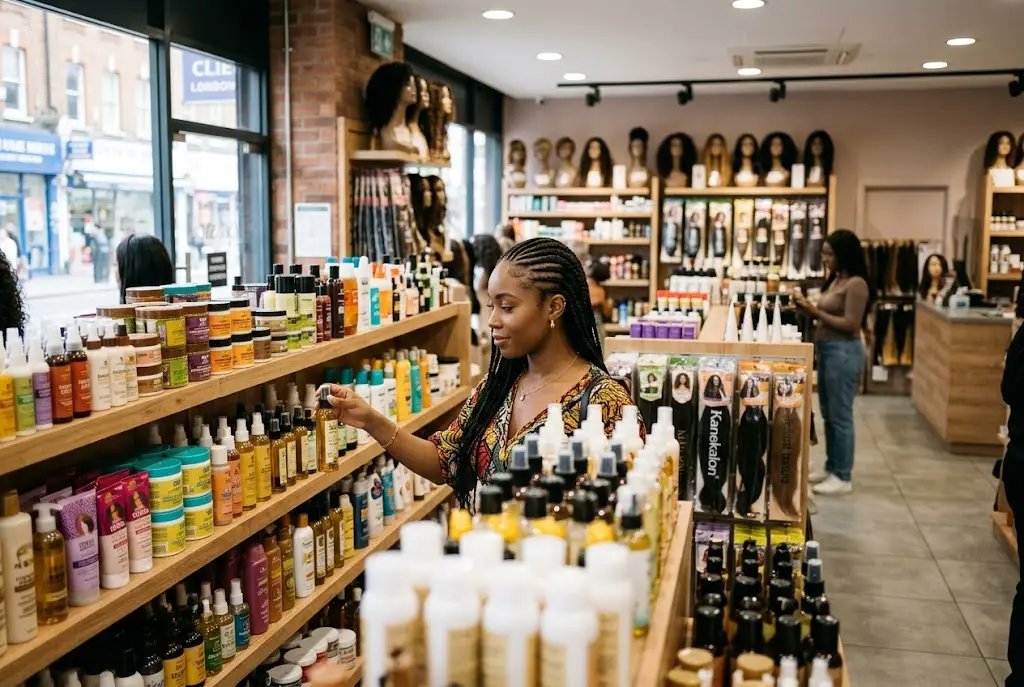
Local searches can also be important. For example, a customer may look for a specialist hair shop or beauty service in a particular town or neighbourhood. Our guide to finding a black hair shop near me demonstrates how location-based beauty searches can address a specific user need.
Start With Beauty Keyword Research
Beauty keyword research provides the foundation for deciding what content to create. The objective is not simply to find keywords with large search volumes. You need to understand what people expect to find when they use those searches.
For example, someone searching for “best skincare products” is likely looking for recommendations or comparisons. Someone searching for a particular moisturiser may be looking for product information, reviews, availability or purchasing options.
These searches have different intentions and should not automatically be targeted with the same type of page.
Group Keywords by Search Intent
Organising keywords by intent can make a content strategy more coherent. Common groups include:
- Informational: Searches looking for explanations, advice or educational content.
- Commercial: Searches comparing products, brands or services before a purchase.
- Transactional: Searches where the user is closer to buying.
- Local: Searches looking for a beauty business, shop or service in a particular location.
- Navigational: Searches for a specific beauty brand, retailer or website.
Mapping each keyword to the most appropriate page type helps prevent content from competing unnecessarily with other pages on the same website.
Build Beauty Topical Authority
Beauty topical authority comes from creating useful coverage across a connected subject area rather than publishing isolated articles with no relationship to one another.
For example, a skincare content cluster might include guides covering skincare routines, ingredients, product comparisons, skin concerns and buying advice. These articles can then support one another through relevant internal links.
This approach gives readers a logical path through the subject while helping search engines understand the relationship between related pages.
A beauty website should therefore think in terms of topic clusters rather than simply maintaining a list of keywords. Each article should have a clear purpose and add something that the other pages do not already provide.
Beauty Content SEO: Create Pages With a Purpose
Beauty content SEO works best when content is created around a genuine user need. Before writing an article, ask what question the reader is trying to answer and what information would make the page genuinely useful.
Product guides, ingredient explainers, comparison articles, tutorials, trend coverage, local guides and educational resources can all have different roles within a beauty website.
For example, our guide to the best beauty products targets product discovery and comparison. A separate article about beauty careers serves a completely different audience and search intent. Keeping those purposes distinct helps reduce unnecessary overlap.
Prioritise Original Value
Simply rewriting information that already appears on dozens of beauty websites gives readers little reason to choose your page. Strong content should add useful context, clearer explanations, practical comparisons, original observations or a better-organised answer.
Google’s current guidance continues to emphasise useful, people-first content and warns against practices designed primarily to manipulate search visibility. A sustainable SEO strategy should therefore begin with the reader rather than trying to manufacture signals for search engines. Google Search Essentials provides official guidance on technical requirements, spam policies and key search best practices.
Internal Linking for Beauty Websites
Internal links are an important part of a strong beauty content structure. They help readers discover related information and give search engines additional context about how pages within the site relate to each other.
Links should be placed where they genuinely help the reader. For example, an article about a beauty retailer could naturally link to related buying guides, while an article about digital beauty businesses could point readers towards SEO or content strategy resources.
Descriptive anchor text is preferable to vague phrases such as “click here”. It gives the reader a clearer indication of what they will find on the destination page.
However, internal linking should remain natural. Adding links simply to increase the number of links on a page can make an article harder to read and may weaken the editorial experience.
Beauty Link Building and Digital PR
Beauty link building involves earning relevant references from other websites. For beauty brands, this can involve product coverage, expert commentary, original research, useful resources, editorial features and relationships with relevant publishers.
Beauty backlinks can support discovery and authority when they come from relevant, trustworthy sources. However, chasing large quantities of low-quality links is not a sustainable strategy.
Digital PR can provide a more editorial approach. A beauty company might create original research about consumer behaviour, contribute expert insight to a relevant publication or produce a useful resource that journalists and publishers genuinely want to reference.
Beauty Digital PR: Earn Attention Rather Than Buy It
Beauty digital PR can connect SEO with public relations, content marketing and brand visibility. The strongest campaigns usually begin with something genuinely interesting or useful rather than an artificial attempt to generate links.
Examples could include original consumer research, expert commentary on beauty trends, seasonal data, educational resources or insights into changes affecting beauty shoppers.
When an asset provides genuine value, relevant publications have a reason to discuss it. This can produce brand exposure as well as opportunities for legitimate editorial references.
Local SEO Within a Beauty SEO Strategy
Local visibility can be particularly important for salons, beauty therapists, specialist retailers and other businesses serving customers in a defined area.
Location pages should provide genuine local value rather than simply replacing a city name across multiple nearly identical pages. Information about services, accessibility, products, opening hours and the areas genuinely served can make a local page more useful.
Businesses should also keep their local business information accurate and consistent across relevant platforms. Customers need to be able to establish where the business is located and what it actually offers.
Technical SEO for Beauty Websites
Content strategy cannot compensate for fundamental technical problems. Beauty websites, particularly ecommerce stores, can contain large numbers of product, category, filter and promotional URLs.
A technical SEO review should consider crawlability, indexability, page performance, mobile usability, canonicalisation, redirects, broken links and the organisation of important pages.
Site architecture matters too. Important categories and resources should be accessible through a logical navigation structure rather than being isolated from the rest of the site.
If URLs are changed during a website redesign, the old and new URLs should be mapped carefully and appropriate redirects implemented. Google recommends updating internal links after a site move and submitting the new sitemap through Search Console.
Measure the Performance of Beauty SEO
SEO should be measured against meaningful business and audience outcomes rather than rankings alone.
Useful measurements can include organic traffic, impressions, clicks, conversions, enquiries, ecommerce revenue, engagement and the performance of individual content clusters.
Search Console can help identify which queries generate impressions and clicks, while analytics data can provide additional information about what visitors do after arriving on the website.
Review performance regularly and look for patterns. If a page receives impressions but few clicks, its search appearance may need improvement. If a page attracts visitors but does not satisfy their intent, the content or conversion path may need attention.
Common Beauty SEO Mistakes
Several mistakes can undermine an otherwise promising strategy.
- Keyword stuffing: Repeating keywords unnaturally can make content difficult to read and may violate search spam policies.
- Creating near-duplicate location pages: Pages that differ only by location can create poor user experiences and may resemble doorway pages.
- Publishing without search intent: A keyword alone does not tell you what type of content the searcher needs.
- Overusing internal links: Links should help navigation and understanding, not clutter every paragraph.
- Ignoring existing content: Updating, consolidating and improving useful pages can sometimes be more effective than continuously adding new articles.
- Chasing low-quality backlinks: Large numbers of irrelevant links are not a substitute for genuine authority.
- Ignoring technical SEO: Excellent content can struggle if important pages cannot be crawled, indexed or reached easily.
Creating a Long-Term Beauty SEO Strategy
A successful beauty SEO strategy should be treated as an ongoing process rather than a one-time campaign. Search behaviour changes, products are replaced, competitors publish new material and customer expectations evolve.
Start with the most valuable topics, build useful supporting content and connect related pages through logical internal links. Then use performance data to identify opportunities for improvement.
As the content library grows, review it periodically. Older pages may need updated information, stronger internal links, improved introductions or clearer answers. Some overlapping articles may be better combined rather than allowed to compete with one another.
Final Thoughts on Beauty SEO
Beauty SEO is most effective when technical optimisation, useful content, search intent, internal linking and authority building work together. Beauty brands do not need to publish endless articles or pursue every available keyword. They need a clear understanding of their audience and a website structure that makes useful information easy to discover.
From beauty keyword research and content SEO to beauty backlinks, digital PR and topical authority, each part of the strategy should contribute to a coherent customer journey. When the focus remains on genuinely useful information and a strong website experience, SEO becomes more than a traffic tactic: it becomes a long-term way to connect beauty businesses with people actively looking for what they offer.