AI beauty is changing how people in the UK discover, test and buy skincare and makeup. Instead of relying only on a shelf label or a friend’s suggestion, shoppers can now use a phone camera, a smart mirror or a retailer’s website to get guidance that feels personal. Artificial intelligence sits behind many of these tools, and it learns patterns from images, answers and product data.
For readers who are new to AI beauty, the appeal is simple. Beauty shopping can feel confusing, and shades or ingredients rarely suit everyone in the same way. AI skincare tools promise a more organised starting point, although they do not replace professional advice. This guide explains what these tools actually do, where they help, and where caution still matters. It also covers privacy, cost and the questions UK shoppers should ask before they share a selfie or follow a recommendation.
What Is AI Beauty?
In simple terms, AI beauty technology uses software that can recognise patterns in data. For example, a system may study the light, tone and texture in a photo of your face. It may then compare that image with the details you gave about your skin type, your concerns and your current routine.
However, the technology does not understand skin in the way a person does. It works from the data it receives, so several things shape the result. The quality of your photo matters, and so do the quiz questions and the product range behind the tool. Therefore, a recommendation is best treated as a suggestion to explore, rather than as a final answer.
This shift forms part of a wider change across the UK beauty industry, where brands and retailers now mix in-store advice with digital tools. Some shoppers use both routes together. For instance, they may start with an app at home and then visit a counter to test a shade in natural light.
How AI Beauty Tools Work
Most beauty AI tools follow a similar path, even when they look very different. First, the tool collects information. You might upload a selfie, answer questions about dryness or sensitivity, or describe the finish you want from a foundation.
Next, the software looks for patterns. It may map areas of the face, estimate how a shade could appear, or match your answers with product features such as texture and coverage. Finally, it presents a result. You may see a suggested routine, a shortlist of products, or an image that shows a lipstick shade on your face.
In addition, some tools learn from feedback. If you rate a recommendation or say that a product felt too heavy, later suggestions may change. That process explains why results can improve over time. It also explains why two people can receive very different answers from the same app.
AI Skincare Analysis at Home and in Store
AI skincare analysis usually starts with a photo taken in good light. The app may ask you to remove makeup, tie back your hair and face the camera directly. Then it highlights areas that its system associates with concerns such as dryness, uneven tone, visible pores or shine.
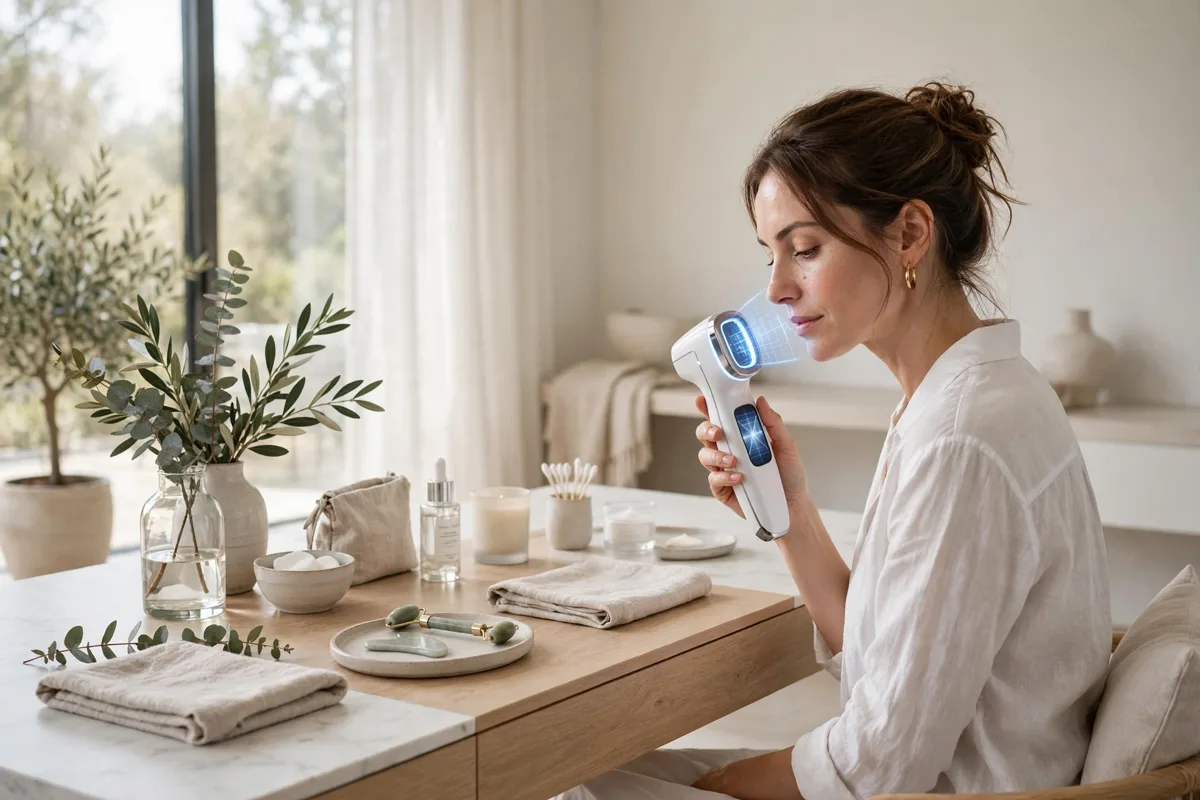
Some smart mirrors and handheld devices work in a similar way, but they add dedicated lights or sensors. Meanwhile, retailers may offer analysis in store, where staff can explain the result and help you compare products. As a result, the in-store version can feel less rushed and easier to question.
What skin analysis can and cannot do
Used carefully, analysis can help you track how your skin looks over time. It can also prompt you to think about basics such as cleansing, moisturising and sun protection. However, it cannot diagnose a skin condition, and it should not decide whether a symptom needs medical care. If you notice a new, changing or worrying mark, or a problem that persists, seek advice from a qualified professional, such as your GP or a dermatologist.
Virtual Try-On and AI Makeup
Virtual try-on tools use your camera or a photo to place makeup shades on an image of your face. You can move between lipstick, blusher, foundation or eyeshadow shades without opening a tester. You also avoid removing the makeup you already wear. For many shoppers, that makes AI makeup useful before a trip to the shops.
The result still depends on your screen, your lighting and your camera. A shade that looks soft on a phone may look stronger in daylight, and an image cannot show texture properly. Therefore, try-on works best as a shortlisting step. After that, test the final shade on your skin whenever you can, especially for foundation.
Some tools also suggest a complete look for an outfit, an occasion or a photo you like. That can be fun when you want to experiment. Even so, your own comfort matters more than a trend the software has selected for you.
Personalised Recommendations and AI Beauty Shopping
Personalisation is where AI beauty recommendations become most visible. After a quiz or analysis, a retailer may suggest a morning cleanser, an evening moisturiser or a foundation in a shade range matched to your photo. AI beauty shopping tools may also remember past purchases, provided you hold an account and have agreed to that storage.
Our guide to beauty shopping in the UK can help you compare delivery options, returns and shade availability between retailers. Similarly, our round-up of the best beauty products can help you sense-check a suggested item against a broader shortlist before you spend.
Nevertheless, recommendations reflect the products a retailer sells. A tool will not usually suggest an item it does not stock, even when another option might suit you better. In practice, it helps to compare the ingredient list, the size and the price across more than one shop. Do not accept the first shortlist as complete.
The Limits of Artificial Intelligence Beauty Tools
Every system has limits, and artificial intelligence beauty tools are no exception. Lighting can change how skin appears in a photo. Makeup, glasses, facial hair and camera quality can also affect the result. Consequently, the same person may receive different guidance on different days.
Fairness deserves attention too. A tool can only perform well for the range of faces, skin tones and needs covered in the data and testing behind it. If a shade range is narrow, or an app struggles with your skin tone, that is a limit of the tool. It is not a failing on your part. Good providers explain their tools clearly and offer another route, such as staff advice or samples.
Finally, be wary of language that promises a perfect match or a guaranteed result. No app can know how a product will feel on your skin. It cannot know how the product will sit under your other products, or whether you will enjoy using it every day.
Privacy: What Happens to Your Photos and Data?
A face photo is personal information, so privacy deserves as much attention as the recommendation itself. Before you upload a selfie, read the privacy notice and look for plain answers. Check what the company collects, why it needs the image, how long it keeps it and whether it shares data with other companies.
In the UK, data protection law gives people rights over their personal information, and the Information Commissioner’s Office explains those rights for the public. For example, you can usually ask a company what information it holds about you. You can also request deletion in some circumstances. The company’s own notice should set out the exact process.
Also check the settings inside your account. Some apps let you delete stored images, turn off marketing or limit how your data is used for personalisation. If a free tool gives no clear explanation of what happens to your photo, consider choosing another tool instead.
How to Choose an AI Beauty Tool in the UK
A careful choice takes only a few minutes, and it can save money later. Start with the job you want the tool to do. Do you want shade matching, routine ideas, or help comparing products you already have in mind?
- Check the photo guidance and use natural light for a clearer result.
- Look for a wide shade and product range, not only one brand.
- Read the privacy notice before you upload any image.
- Compare the price, size and returns policy before you buy.
- Start with one product, then judge the result on your own skin.
- Keep your routine simple while you test something new.
Cost matters as well. Some tools are free because a retailer sells the products they recommend. In contrast, devices and premium apps may charge upfront or by subscription. Before you pay, check the cancellation terms and the total price in pounds, so the cost stays clear from the start.
Readers who want lower-impact choices can explore our guide to sustainable beauty choices alongside any AI shortlist. A tool that helps you buy less and waste less can be more useful than one that simply fills a basket.
Conclusion: A Helpful Assistant, Not a Replacement
AI beauty works best as an assistant. It can organise information, show you shades quickly and narrow a long product list into a manageable shortlist. At the same time, your own skin, taste and budget remain the final test.
So try these tools with curiosity and a little caution. Use good light, read the privacy notice and question any claim that sounds absolute. Then combine digital guidance with samples, staff advice and your own experience. That balanced approach helps UK shoppers enjoy AI skincare and makeup technology without handing every decision to an app.