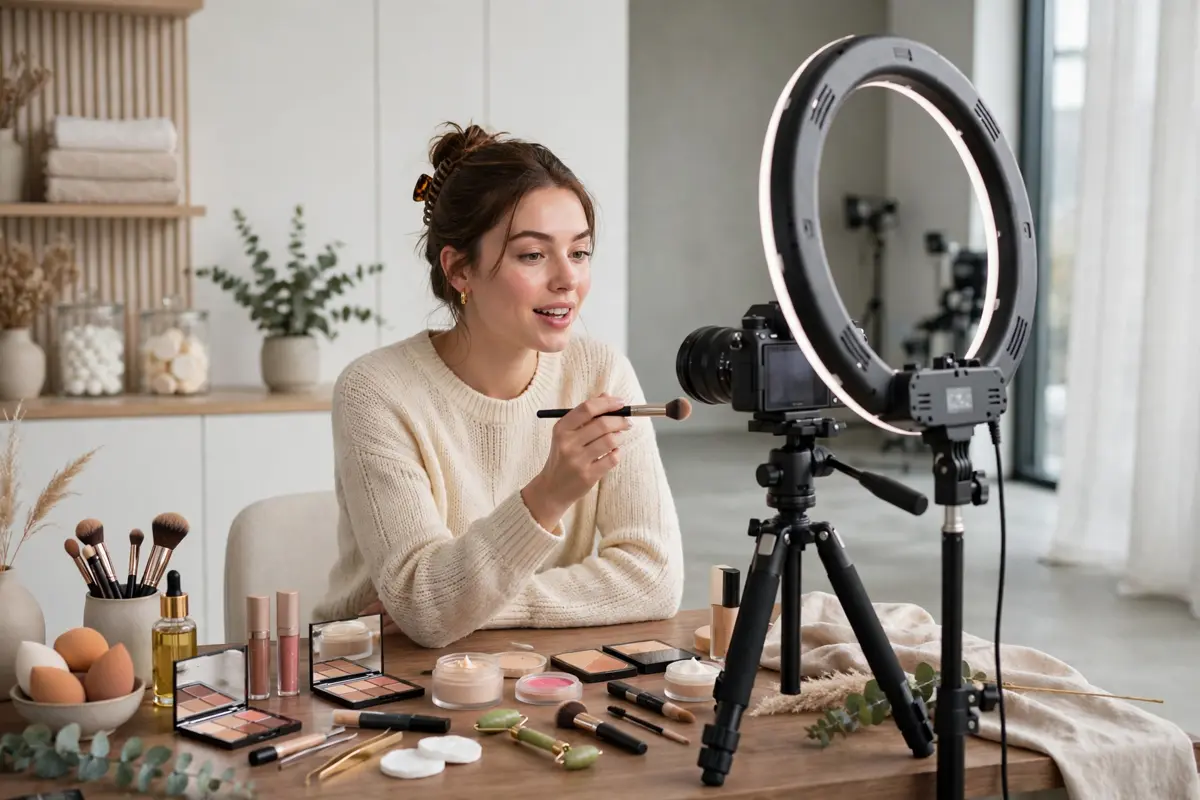
Beauty influencers UK shape what millions of people buy, try and believe about beauty. From large creators with studio setups to smaller specialists with loyal followings, influencers now rival traditional advertising for impact. That influence can be genuinely helpful — honest reviews, real demonstrations, and expertise you cannot find in a shop — but it can also mislead. This guide explains how beauty influencers work in the UK, how to judge them, and how to use their advice wisely.
The key skill is not finding influencers to follow. It is learning to tell the difference between a recommendation and an advertisement, and between expertise and enthusiasm.
How Beauty Influencers Work in the UK
UK beauty influencers earn through several routes: paid partnerships with brands, affiliate links that pay commission on sales, gifted products, advertising revenue, and their own product lines. None of these is inherently dishonest — creators deserve to earn a living — but each creates incentives that shape what they say. A creator paid to promote a product is unlikely to criticise it, and a creator earning commission on sales benefits when you buy through their link.
UK rules require clear disclosure: paid partnerships and gifted products that influence content should be labelled, typically with “ad” or similar wording. Responsible creators disclose clearly and consistently. If a creator never discloses, rarely criticises anything, or presents every product as life-changing, treat their recommendations with caution.
Judging a Beauty Influencer
Start with expertise. Does the creator explain why a product works, what is in it, and who it suits — or only how it looks and feels? Genuine expertise shows in specifics: ingredients, skin types, application technique, and honest discussion of limitations. Enthusiasm alone, however engaging, is not expertise.
Next, look for balance. Trustworthy creators discuss products that disappointed them, explain when something did not suit their skin, and distinguish between a product they love and one that is merely adequate. A feed with no negative opinion at all is a marketing channel, not a review source. Also check consistency: does the creator recommend the same product differently depending on the sponsor, or do their views hold steady over time?
Finally, consider fit. A creator with your skin type, tone, concerns and budget is far more useful than a famous one with different needs. Smaller UK creators who specialise — in textured hair, mature skin, sensitive skin, or affordable beauty — often give more relevant advice than generalists with millions of followers.
Using Influencer Advice Wisely
Use influencers for discovery and demonstration, not as your only source. A video showing how a product applies, wears and looks in real light is genuinely useful information you cannot get from a product page. But before buying, cross-check: read the ingredients, compare with independent reviews, and consider whether the product suits your skin and budget rather than the creator’s.
Be especially careful with claims about results. Lighting, filters, editing and selective before-and-after photos can exaggerate effects dramatically. Claims about clearing skin, reversing ageing, or transforming hair should be treated as marketing unless supported by evidence and realistic timelines. If a product sounds too good to be true, it usually is.
For broader context, our UK beauty industry overview explains the market influencers operate in, and our beauty shopping UK guide can help you buy wisely once you have found something worth trying. Our best beauty products guide offers independent starting points, while our future of beauty guide looks at how creator-led discovery is reshaping the industry. If you are considering beauty as a career, our beauty careers guide covers the roles behind the content you watch.
Disclosure Done Well: What to Look For
Good disclosure is easy to spot once you know what it looks like. A trustworthy creator labels paid content clearly at the start — in the caption, on screen, or in the first lines — rather than burying it at the end or behind a vague hashtag. They distinguish between products they were paid to show, products they were sent for free, and products they bought themselves. They also disclose affiliate links, so you know when a purchase earns them commission. Creators who disclose thoroughly are not less persuasive; they are more trustworthy, because they treat you as someone who deserves the full picture. If you cannot tell within seconds whether a post is an advertisement, that ambiguity is itself information about the creator.
The Best Way to Follow Beauty Influencers
Follow a small number of creators whose expertise, honesty and relevance you have tested over time, rather than dozens whose recommendations blur together. Notice who discloses clearly, who admits mistakes, and whose advice actually worked for you. Unfollow freely when a creator’s content becomes pure promotion.
Beauty influencers UK offer something valuable: real people showing real products in real light, with knowledge shops cannot match. Used wisely — as one input among several, judged on expertise and honesty — they can genuinely improve how you discover and choose beauty. Follow the creators who respect your intelligence, and your routine will be better for it. And keep reviewing who you follow: as your skin, budget and interests change, so should the voices you trust.
Revisit your follow list every few months, keep the creators who still earn your trust, and let go of those who no longer do. Your feed should serve your skin and your wallet, not merely entertain you — and a smaller, better-chosen set of voices will always beat a crowded one. The creators worth following are the ones who make you a smarter buyer, not just a more frequent one, and that standard will serve you well no matter how the platform landscape changes.