Modern vehicles depend heavily on reliable car electrical systems. From starting your engine to operating advanced safety features, your vehicle’s electrical network powers almost every important function. When electrical problems develop, they can cause anything from warning lights and poor performance to complete breakdowns.
Whether you’re experiencing intermittent faults, a flat battery, or dashboard warning lights, understanding how vehicle electrical systems work can help you make informed decisions and avoid expensive repairs. This guide explains common electrical issues, diagnostic procedures, repair options, and when it’s time to visit an experienced auto electrical specialist.
What Is a Car Electrical System?
A vehicle’s electrical system consists of multiple interconnected components that generate, store, distribute, and manage electrical power throughout the car.
Major components include:
- Battery
- Alternator
- Starter motor
- Fuse boxes
- Relays
- Control modules (ECUs)
- Sensors
- Wiring harnesses
- Lighting systems
- Charging circuits
Even a small wiring fault can affect several systems simultaneously, which is why professional diagnostics are often necessary.
Common Car Electrical Problems
Electrical faults often appear gradually before becoming serious. Common symptoms include:
- Battery repeatedly going flat
- Engine struggling to start
- Dashboard warning lights
- Lights flickering
- Electric windows not operating
- Central locking failures
- Faulty parking sensors
- Radio or infotainment issues
- Blown fuses
- Intermittent starting problems
Ignoring these symptoms can lead to larger failures and higher repair costs.
Professional Car Electrical Diagnostics
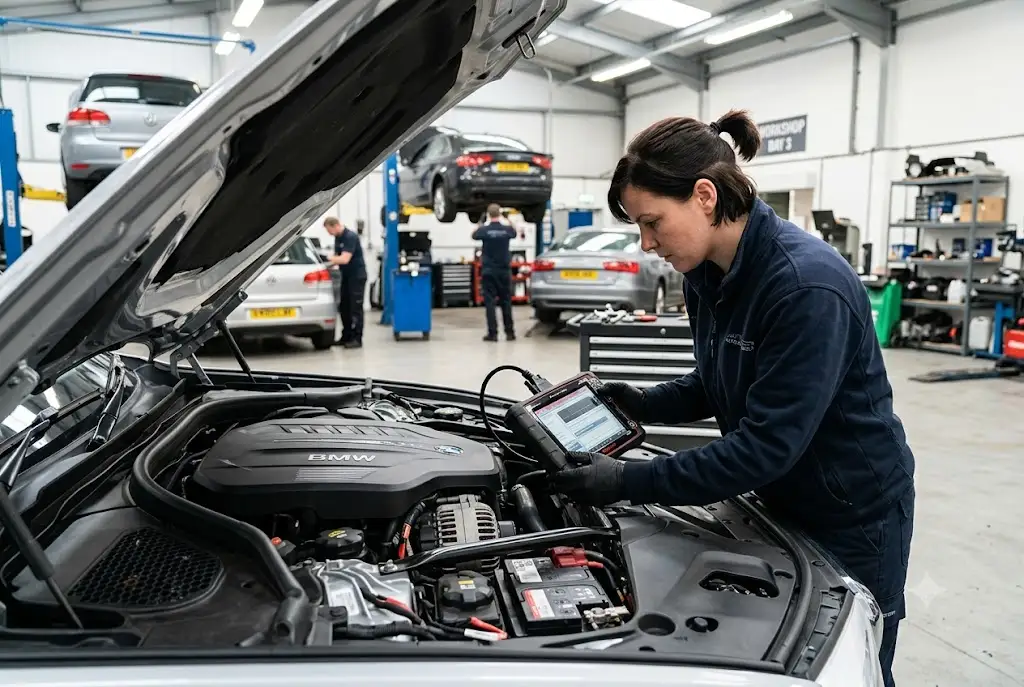
Professional diagnostics combine advanced scan tools with electrical testing equipment to identify faults accurately.
A qualified technician typically checks:
- Stored fault codes
- Battery health
- Charging voltage
- Alternator performance
- Starter current draw
- Sensor signals
- Fuse continuity
- Wiring integrity
- Ground connections
Many garages advertise a free auto diagnostic check or free car diagnostic check. While these may include a basic fault code scan, more complex electrical investigations often require additional testing.
When to Visit an Auto Electrical Specialist Near Me
Searching for an auto electrical specialist near me is worthwhile if your vehicle has recurring electrical faults that standard servicing hasn’t resolved.
An experienced specialist can diagnose:
- ECU communication faults
- CAN bus problems
- Parasitic battery drain
- Short circuits
- Water-damaged wiring
- Module programming issues
- Electrical accessory failures
Choosing a workshop with dedicated diagnostic equipment often reduces unnecessary parts replacement.
Finding an Auto Electrician Near Me Within 5 Mi
If your vehicle develops an urgent electrical problem, searching for an auto electrician near me within 5 mi can help you locate nearby specialists quickly.
When comparing garages, consider:
- Manufacturer diagnostic equipment
- Qualified technicians
- Warranty on repairs
- Customer reviews
- Transparent pricing
- Experience with your vehicle make
Understanding Car Auto Electrics
The term car auto electrics refers to all electrical systems fitted throughout a vehicle.
These include:
- Lighting
- Charging systems
- Starting systems
- Engine management
- Air conditioning controls
- Power steering electronics
- Safety systems
- Infotainment
- Driver assistance technologies
As modern vehicles become increasingly computer-controlled, maintaining these systems becomes more important than ever.
Engine Starter Repair
If your engine fails to crank properly, you may require an engine starter repair. The starter motor draws significant electrical current to turn the engine during ignition.
Common starter issues include:
- Clicking noises
- Slow cranking
- No crank at all
- Intermittent starting
- Burnt starter solenoid
Before replacing the starter motor, technicians should also inspect the battery, alternator, wiring, and ignition system to identify the true cause.
Importance of Regular Diagnostic Checks
Routine diagnostics can identify developing faults before they become expensive repairs.
Early detection helps:
- Prevent breakdowns
- Improve reliability
- Reduce repair costs
- Protect electronic components
- Improve fuel efficiency
- Maintain resale value
If your dashboard warning lights remain illuminated, arranging a professional diagnostic inspection is recommended.
Related Vehicle Services
Electrical issues often affect other vehicle systems. For example, worn drive belts may reduce alternator performance, while a weak battery can create misleading electrical fault codes.
If diagnostics reveal charging system problems, you may also benefit from our guide on engine belt replacement, which explains how auxiliary and serpentine belts support the charging system.
Similarly, if testing confirms your battery has reached the end of its service life, our article on car battery replacement explains replacement options, mobile fitting services, and maintenance tips.
How to Choose a Reliable Auto Electrical Garage
Not every garage specialises in complex electrical repairs. Choosing the right workshop can save both time and money.
Look for businesses that offer:
- Modern diagnostic equipment
- Qualified technicians
- Transparent quotations
- Warranty-backed repairs
- Clear explanations
- Good customer reviews
Final Thoughts
Today’s vehicles rely on sophisticated electrical systems that require specialist knowledge and diagnostic equipment. Whether you’re dealing with warning lights, charging problems, intermittent faults, or starting issues, early diagnosis helps prevent costly repairs and improves vehicle reliability.
Working with an experienced auto electrical specialist ensures faults are identified accurately rather than relying on unnecessary parts replacement. Regular inspections and prompt repairs also help keep your vehicle safe, efficient, and dependable for everyday driving.
For further information about vehicle maintenance and electrical safety, consult guidance published by the RAC vehicle advice centre.