Understanding mobile mechanic prices can make it easier to budget for car repairs without automatically taking your vehicle to a traditional garage. A mobile mechanic can come to your home, workplace or another suitable location and carry out many repairs, servicing tasks and diagnostic checks on-site.
The amount you pay depends on the type of repair, your location, the mechanic’s experience, the vehicle involved and whether a call-out fee applies. In 2026, published UK cost guides commonly place mobile mechanic labour around £25 to £60 per hour, with call-out charges often added separately. Actual quotes can vary considerably between mechanics and regions.
This guide explains what affects mobile mechanic prices, which jobs can normally be completed at your location, when a mobile mechanic makes sense and what to ask before accepting a quote.
What Are Mobile Mechanic Prices in the UK?
There is no single national price for mobile mechanics. Unlike a fixed garage with one published labour rate, mobile mechanics can structure their prices around travel, labour, parts, diagnostics and the complexity of the job.
Checkatrade’s 2026 cost guide puts the typical mobile mechanic hourly rate at around £25 to £60, with an average of approximately £45 per hour. It also reports that call-out fees commonly fall between £45 and £85. These figures are useful as broad benchmarks rather than guaranteed prices.
Other UK cost data shows that customers may pay a fixed price for a completed job instead of an hourly rate. Airtasker’s May 2026 data, for example, puts typical mobile mechanic jobs at around £60 to £350, with an average range of approximately £90 to £120 per completed task.
That difference illustrates why asking only for an hourly rate does not always tell you what the final bill will be. A mechanic who quotes a complete job may provide better cost certainty than one charging strictly by the hour.
What Affects Mobile Mechanic Prices?
Several factors can change the price of a mobile repair. Understanding them can help you judge whether a quotation is reasonable.
Type of Repair
A simple battery replacement may take considerably less time than diagnosing an intermittent electrical fault. Brake work, suspension repairs, cooling-system problems and engine-related repairs can also vary significantly in complexity.
For this reason, a mechanic may give you a fixed quotation for a straightforward repair but use an hourly labour rate for diagnostic or unpredictable work.
Vehicle Make and Model
The vehicle itself can influence the cost. Some cars have easier access to components, while others require more time, specialist equipment or manufacturer-specific knowledge.
Parts prices can also vary considerably between vehicle manufacturers and models. Before accepting a quote, ask whether the price includes parts and whether the parts are genuine, original-equipment equivalent or aftermarket.
Location and Travel
A mobile mechanic has to travel to you, so location is an important part of the pricing structure. A short local journey may be included in the quoted price, while a longer trip can result in an additional call-out or travel charge.
Urban areas, rural locations and regions with higher operating costs can all have different pricing levels. Published UK cost data also shows regional differences, with London and other higher-cost areas generally tending towards the upper end of national ranges.
Time of the Appointment
Urgent repairs, evenings, weekends and bank holidays may cost more than standard weekday appointments. If your vehicle is not immediately needed, choosing a normal working-hour appointment may help keep the total cost down.
Parts and Materials
Labour is only one part of a repair bill. Replacement components, fluids, filters, diagnostic equipment and other materials may be charged separately.
Ask for an itemised quotation so you know how much is being charged for labour and how much relates to parts or additional services.
Mobile Mechanic Prices for Common Jobs
Prices for specific repairs vary by vehicle and location, but current UK cost guides provide useful benchmarks.
For example, Airtasker’s 2026 UK data lists typical mobile mechanic prices of approximately £60 to £100 for a diagnostic or inspection, £70 to £110 for an oil change, £90 to £160 for a battery replacement, £120 to £220 for brake pad replacement, £180 to £300 for a starter motor replacement and £220 to £350 for an alternator replacement.
These are indicative figures rather than fixed national prices. A particular vehicle may cost more or less depending on the parts required, access to the component, labour time and the mechanic’s location.
For larger jobs, always request a vehicle-specific quotation before work begins.
What Is a Mobile Mechanic Van?
A mobile mechanic van is essentially a workshop on wheels. It allows a mechanic to carry tools, diagnostic equipment, replacement parts and other equipment directly to the customer’s location.
The exact equipment varies between operators. Some mobile mechanics specialise in routine servicing and smaller repairs, while others carry advanced diagnostic equipment and tools for more complicated work.
The advantage is convenience. Instead of arranging recovery or leaving your vehicle at a garage, you may be able to have suitable work completed outside your home or workplace.
What Repairs Can a Mobile Mechanic Do?
Mobile mechanics can complete many common maintenance and repair jobs, provided the vehicle and location are suitable.
- Battery replacement
- Brake component replacement
- Oil and filter changes
- Vehicle diagnostics
- Starter motor replacement
- Alternator replacement
- Some suspension repairs
- Some cooling-system repairs
- Routine servicing
- Pre-MOT checks and preparation
However, not every repair is suitable for a driveway or roadside location. Jobs requiring a vehicle lift, specialist workshop machinery or extensive dismantling may need to be completed at a fixed garage.
A reputable mechanic should tell you if your vehicle needs workshop equipment rather than attempting unsuitable work in an unsafe location.
Can a Mobile Mechanic Carry Out an MOT?
A common search is mobile MOT, but there is an important distinction between mobile MOT preparation and the MOT test itself.
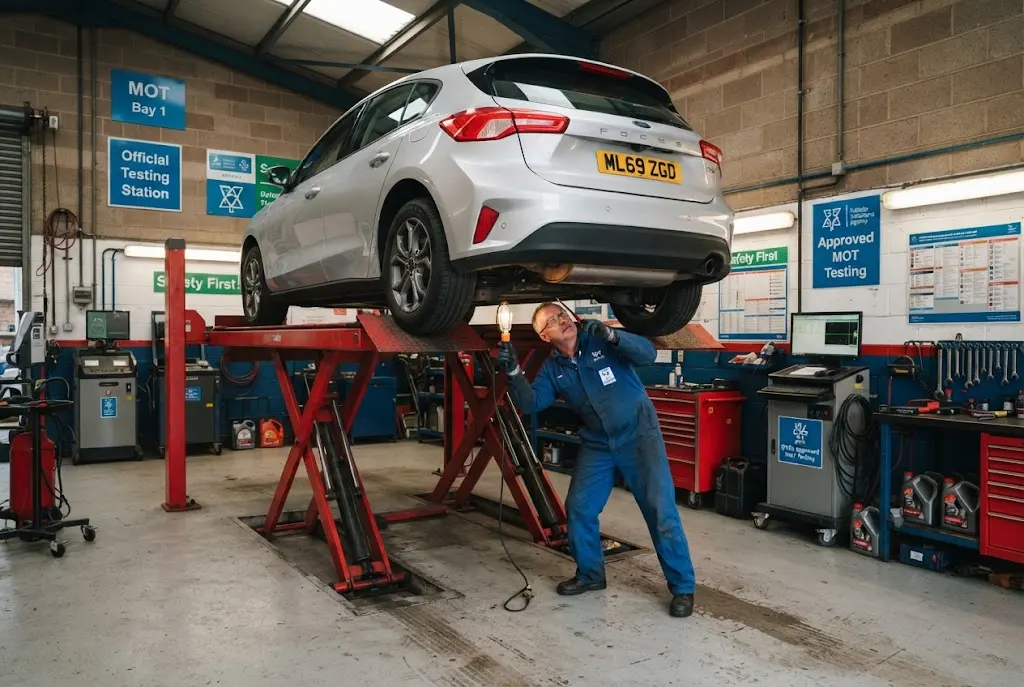
An MOT test must be carried out at an authorised MOT testing station. A mobile mechanic cannot simply perform an official MOT test at your home because they have a mobile mechanic van.
However, a mobile mechanic can help prepare your vehicle for its MOT. They may inspect or repair issues such as lights, brakes, tyres or other components before you take the car to an authorised testing station.
This can be useful if you want to identify potential problems before the official test.
Mobile Mechanic vs Traditional Garage
Choosing between a mobile mechanic and a fixed garage depends on the repair and your priorities.
A mobile mechanic offers convenience because the vehicle does not normally need to be driven to a workshop. This can be particularly valuable when the car will not start or you have limited time available.
A traditional garage, on the other hand, has access to workshop equipment, ramps, lifts and specialist machinery that may not be practical for a mobile operator to carry.
Cost is not automatically lower with one option. Mobile mechanics may have lower premises overheads, but they also have travel costs and may charge a call-out fee. Compare the complete quotation rather than the headline hourly rate.
How to Find Good Mechanics Near Me
Searching for good mechanics near me can produce many options, but proximity should not be your only selection criterion.
Look for evidence of relevant experience, transparent pricing and positive customer feedback. Ask whether the mechanic is experienced with your vehicle make and the particular repair you need.
You should also ask what happens if the mechanic diagnoses a different problem after arriving. Some providers charge a separate diagnostic fee, while others may include an initial assessment within their quotation.
Before booking, confirm the mechanic’s business details, the work being performed, the expected price and any applicable warranty or guarantee on parts and labour.
Questions to Ask Before Accepting a Quote
A few questions can prevent unexpected charges later.
- Is the quoted price fixed or based on an hourly rate?
- Is a call-out fee included?
- Are parts included?
- Is VAT included where applicable?
- Will diagnostics cost extra?
- What happens if additional faults are found?
- Does the mechanic provide a warranty for the work?
- Are replacement parts new or used?
- How long is the estimated repair?
For more complicated repairs, ask for the quotation in writing. This gives you something to compare if you contact another provider.
How to Keep Mobile Mechanic Costs Down
The easiest way to control costs is to provide accurate information when requesting a quote. Tell the mechanic the vehicle registration or exact make and model, explain the symptoms and mention any dashboard warning lights.
If you know which component has failed, say so, but do not insist on a particular repair if the diagnosis has not been confirmed. A professional mechanic may discover that the underlying problem is different.
It can also help to compare at least two or three itemised quotations for non-urgent work. A lower quote is not necessarily better if it uses inferior parts or excludes important services.
Regular maintenance can also reduce the chance of expensive breakdowns. If you are buying a used vehicle, arranging a car inspection before purchase can help you identify potential maintenance issues before committing to the vehicle.
What If a Repair Is More Expensive Than Expected?
Some faults cannot be accurately priced until the mechanic has inspected the vehicle. This is particularly true of electrical problems, intermittent faults and issues where several components could produce similar symptoms.
If the mechanic discovers additional work, ask for an updated quotation before authorising it. Do not assume that an initial estimate automatically covers every possible repair.
For substantial unexpected bills, you may also want to research finance for car repairs and understand the available payment options before agreeing to expensive work.
Are Mobile Mechanics Worth It?
For the right type of repair, a mobile mechanic can be a highly convenient alternative to a fixed garage.
The biggest advantage is that you do not normally need to arrange transport for the vehicle to a workshop. This can save time and make a significant difference when the car is unable to start.
The service is also useful for people who cannot easily leave their vehicle at a garage during working hours. Having a mechanic attend at home or at work can make routine maintenance easier to organise.
However, convenience should not replace proper due diligence. Check the mechanic’s experience, reviews, pricing structure and suitability for your particular repair before booking.
Final Thoughts on Mobile Mechanic Prices
Mobile mechanic prices vary across the UK because every repair, vehicle and location is different. Current 2026 cost guides commonly put mobile labour somewhere around £25 to £60 per hour, although some providers charge higher rates, fixed job prices or separate call-out fees.
The best way to understand your actual cost is to request an itemised quotation that clearly separates labour, parts, diagnostics and travel or call-out charges.
A mobile mechanic can be an excellent choice for many repairs, particularly when convenience matters or the vehicle cannot easily be driven to a garage. For work requiring specialist workshop equipment, however, a traditional garage may be more appropriate.
By comparing complete quotations and checking what is included before work starts, you can make a better-informed decision and avoid surprises on the final invoice.