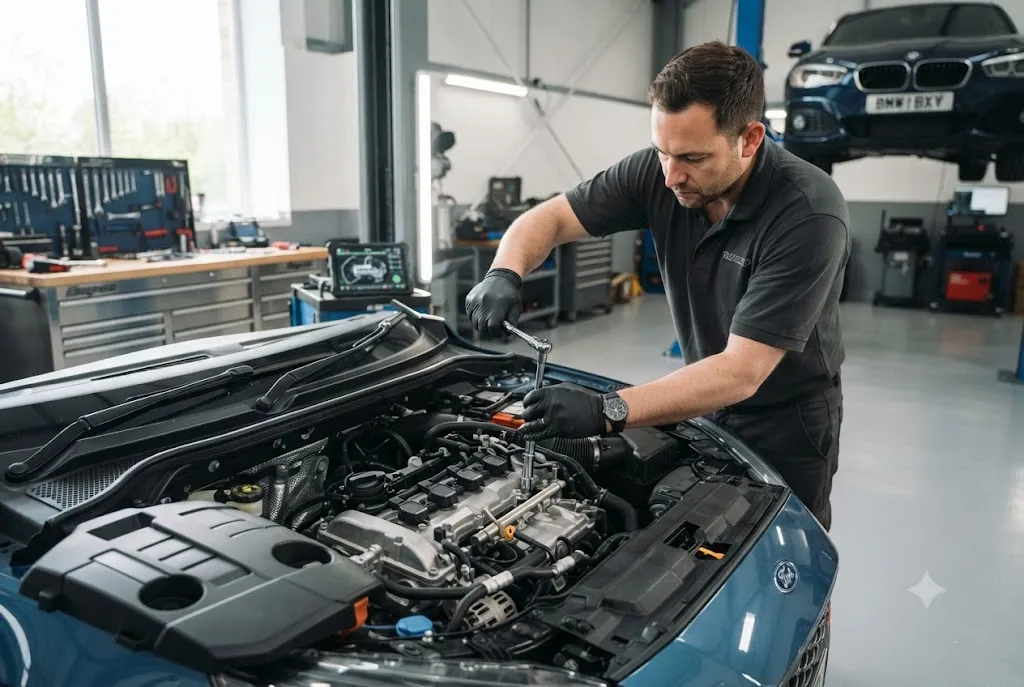
Spark plugs replacement is one of the most important maintenance tasks for petrol-powered vehicles. Although spark plugs are relatively small components, they play a critical role in engine performance, fuel efficiency, starting reliability, and emissions control.
Many drivers overlook spark plugs until performance problems begin to appear. However, replacing worn spark plugs at the correct interval can help prevent expensive repairs, improve fuel economy, and keep your vehicle running smoothly. In this guide, we’ll explain when spark plugs should be replaced, common warning signs, expected costs, and related engine maintenance considerations.
What Are Spark Plugs?
Car spark plugs are ignition components that create the electrical spark needed to ignite the air-fuel mixture inside the engine’s combustion chamber.
Every time you start your vehicle and drive, spark plugs fire thousands of times per minute. Over time, this continuous operation causes wear that eventually reduces efficiency and performance.
Without properly functioning spark plugs, the engine cannot produce consistent combustion.
Why Is Spark Plugs Replacement Important?
As spark plugs wear, the ignition process becomes less efficient. This can lead to reduced performance, poor fuel economy, and increased strain on other engine components.
Replacing worn spark plugs helps:
- Improve engine performance
- Enhance fuel efficiency
- Reduce harmful emissions
- Improve engine starting
- Prevent misfires
- Protect ignition components
- Reduce long-term repair costs
Routine replacement is often far less expensive than repairing damage caused by neglected ignition components.
When Should Spark Plugs Be Replaced?
The replacement interval depends on the type of spark plugs installed and manufacturer recommendations.
Typical replacement intervals include:
- Copper spark plugs: 20,000–30,000 miles
- Platinum spark plugs: 60,000–100,000 miles
- Iridium spark plugs: 80,000–120,000 miles
Always consult your vehicle manufacturer’s maintenance schedule for exact recommendations.
Keeping maintenance records in a service log book helps ensure replacement intervals are not missed.
Signs You Need Spark Plugs Replacement
Several symptoms may indicate worn or failing spark plugs.
Engine Misfires
One of the most common warning signs is engine misfiring. This occurs when combustion does not happen correctly in one or more cylinders.
Difficulty Starting
If your vehicle struggles to start, worn spark plugs may not be generating sufficient ignition energy.
Poor Fuel Economy
Inefficient combustion can cause the engine to consume more fuel than necessary.
Rough Idling
An uneven or shaky idle often indicates ignition-related issues.
Reduced Acceleration
Vehicles with worn spark plugs may feel sluggish during acceleration.
Engine Warning Light
Modern vehicles often detect ignition system problems and trigger dashboard warning indicators.
How Spark Plugs Affect Engine Performance
Efficient combustion depends on consistent ignition timing and spark quality.
When spark plugs wear out, combustion becomes less reliable, which can affect:
- Power output
- Throttle response
- Fuel consumption
- Engine smoothness
- Cold-weather starting performance
Replacing spark plugs often restores performance that drivers may not realise has gradually deteriorated over time.
What Causes Spark Plug Wear?
Although spark plugs are designed to last for many years, several factors contribute to wear.
- Normal electrode erosion
- High engine temperatures
- Oil contamination
- Carbon deposits
- Poor fuel quality
- Engine tuning issues
- Excessive mileage
Regular inspections during servicing can help identify these issues early.
Engine Plugs Car Owners Should Monitor
While spark plugs are among the most commonly serviced ignition components, they work alongside several related systems.
Mechanics often inspect:
- Ignition coils
- Spark plug wires
- Fuel injectors
- Air filters
- Engine sensors
Addressing problems across the ignition system helps ensure reliable engine operation.
Automotive Drive Belts and Spark Plug Maintenance
Engine maintenance involves much more than ignition components alone.
During servicing, technicians often inspect automotive drive belts, which power essential systems such as alternators, water pumps, and air conditioning compressors.
Maintaining both ignition and belt systems helps prevent unexpected breakdowns.
Serpentine Belt Replacement
A worn serpentine belt can affect multiple engine accessories simultaneously. Because of its importance, serpentine belt replacement is commonly recommended during major maintenance intervals.
Auxiliary Belt Car Maintenance
An auxiliary belt car system may power several critical components. Cracks, fraying, or unusual noises often indicate the need for inspection or replacement.
Combining spark plug inspections with belt inspections helps create a more comprehensive maintenance approach.
How Much Does Spark Plugs Replacement Cost?
Costs vary depending on vehicle make, model, engine design, and labour requirements.
Factors affecting cost include:
- Number of cylinders
- Engine accessibility
- Type of spark plugs used
- Labour rates
- Additional ignition system repairs
In many vehicles, spark plug replacement remains one of the more affordable preventative maintenance services available.
Drivers concerned about repair expenses can learn more about average car repair cost considerations when budgeting for vehicle maintenance.
Can You Replace Spark Plugs Yourself?
Some experienced vehicle owners choose to replace spark plugs themselves.
However, modern engines can be complex, and incorrect installation may result in:
- Engine damage
- Cross-threaded spark plug holes
- Ignition problems
- Reduced performance
- Costly repairs
For many drivers, professional installation provides greater peace of mind.
How Regular Servicing Helps Prevent Ignition Problems
Routine maintenance is one of the best ways to identify spark plug wear before serious symptoms appear.
Following manufacturer service schedules makes it easier to determine when is my car service due and ensure important maintenance items are completed on time.
Regular servicing also allows technicians to inspect related components that may affect ignition performance.
Official Maintenance Guidance
The RAC car maintenance guidance highlights the importance of preventative maintenance and routine servicing for maintaining vehicle reliability and reducing unexpected breakdowns.
Conclusion
Spark plugs replacement is a relatively simple maintenance task that can have a significant impact on engine performance, fuel efficiency, and reliability. Ignoring worn spark plugs may lead to misfires, poor fuel economy, difficult starting, and higher repair costs.
By following manufacturer recommendations, maintaining accurate service records, and addressing ignition system issues early, vehicle owners can help keep their engines running smoothly and efficiently for years to come.
Understanding the significance of spark plug replacement is crucial not just for optimal engine performance, but also as part of a broader maintenance regimen that ensures your vehicle remains in peak condition. Regular servicing plays a key role in extending the life of your car and enhancing its reliability. As spark plugs wear out, they can lead to issues that may require more extensive repairs if neglected. This emphasizes the importance of adhering to a structured maintenance schedule that includes timely spark plug changes. For vehicle owners in the UK, it’s essential to know how often to service car to maintain not only engine components like spark plugs but also other critical systems that contribute to safe and efficient driving. Ensuring that your vehicle is routinely serviced can save you both time and money in the long run.
Understanding the significance of spark plug maintenance is essential for preserving your vehicle’s overall health. However, regular maintenance extends beyond just replacing spark plugs; it encompasses a comprehensive approach to vehicle care, including timely inspections and necessary tests. In the UK, ensuring your vehicle meets safety and emissions standards is crucial, which is where finding reliable testing facilities becomes indispensable. For drivers seeking assurance that their cars are roadworthy, locating trusted garages near me for MOT can streamline the process, allowing for peace of mind while also contributing to the longevity of essential engine components like spark plugs. By prioritizing both spark plug replacement and comprehensive vehicle checks, you can enhance performance and reliability, ultimately ensuring a smooth driving experience.