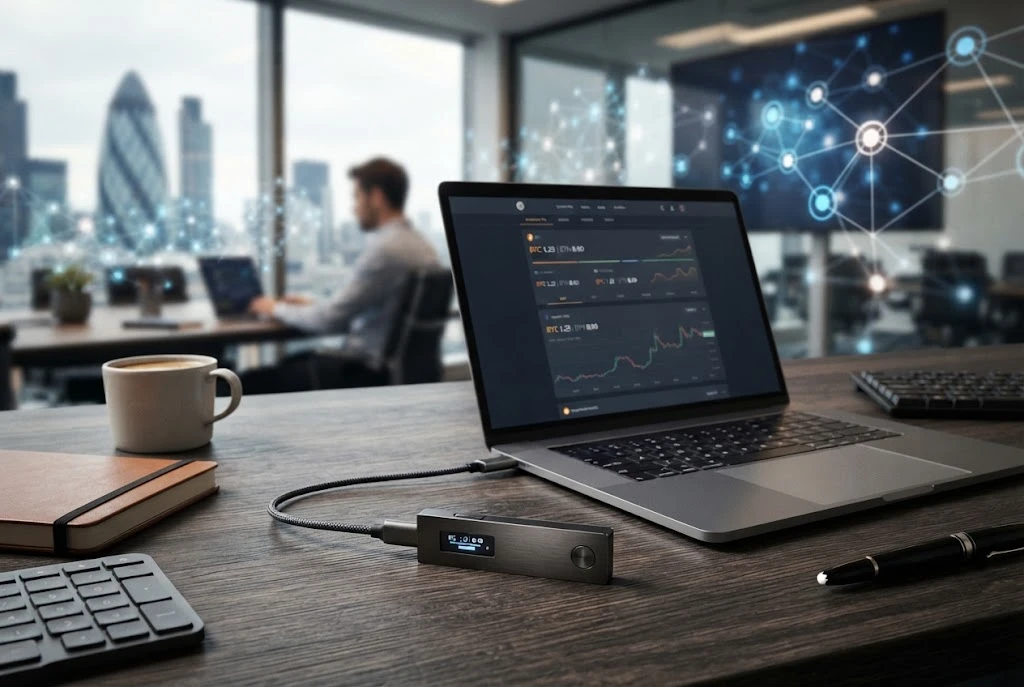
Choosing the best hardware cryptocurrency wallet requires more than comparing device designs or supported coins. A hardware wallet is a dedicated device designed to help protect the credentials used to control cryptocurrency, typically keeping sensitive signing information separated from an everyday computer or smartphone. For UK users considering long-term digital asset storage, understanding how these devices work can make it easier to compare security, compatibility and usability.
Hardware wallets are particularly relevant to people who want a self-custody approach rather than leaving all of their assets on a cryptocurrency exchange. They are also an important part of the wider cryptocurrency wallet software landscape, because many hardware devices connect with wallet applications to provide an interface for managing assets.
What Is the Best Hardware Cryptocurrency Wallet?
There is no single hardware wallet that is automatically the best for every cryptocurrency user. Different devices offer different combinations of supported networks, security architecture, connectivity options, interfaces and recovery mechanisms.
The right choice depends on how you intend to use the device. Someone holding a small number of supported assets may have different requirements from a user managing multiple blockchain networks. Likewise, a person making frequent transactions may place more importance on convenience than someone primarily interested in long-term cold storage.
Instead of choosing based solely on popularity, compare the device’s security model, supported assets, software compatibility, recovery process and overall usability.
How Hardware Cryptocurrency Wallets Work
A hardware wallet is a physical device that is designed to protect the private keys or signing credentials associated with cryptocurrency transactions. The device generally works alongside compatible wallet software, allowing users to view balances and prepare transactions while keeping sensitive signing operations within the hardware environment.
This separation can provide an additional layer of protection because private information does not need to remain exposed on an ordinary computer or smartphone in the same way it might with a conventional software-only setup.
However, a hardware wallet does not mean that cryptocurrency becomes physically stored inside the device. Blockchain assets remain recorded on their respective networks. The device primarily helps protect the credentials required to authorise transactions.
Understanding this distinction is important when comparing best cryptocurrency wallet hardware with conventional software wallets.
Cold-Storage Technology Explained
Cold-storage technology generally refers to keeping cryptocurrency signing credentials offline or isolated from internet-connected environments. Hardware wallets are one commonly used approach to achieving this type of separation.
The principle is straightforward: reducing the exposure of sensitive credentials can reduce certain categories of online attack. Instead of relying entirely on a computer or smartphone that is regularly connected to the internet, a dedicated device can be used to approve transactions.
Cold storage does not eliminate every security risk. Physical loss, theft, malicious replacement devices, compromised recovery information and user mistakes can still create serious problems. Consequently, hardware security should be considered as part of a broader digital asset protection strategy.
Why Hardware Wallet Security Matters
Cryptocurrency transactions can be difficult to reverse once they have been confirmed on a blockchain. This makes the protection of private keys and transaction approvals particularly important.
A hardware wallet can help reduce exposure by keeping important signing operations within a dedicated environment. Nevertheless, the user’s behaviour remains critical. A secure device can be undermined if recovery credentials are exposed, a fraudulent transaction is approved or the device is obtained from an untrustworthy source.
Users should therefore consider the entire security process rather than focusing on one technical feature.
For a broader discussion of digital asset security and wallet protection, it is useful to examine how device security, recovery procedures and transaction verification work together.
Private Keys and Recovery Information
Private keys are fundamental to cryptocurrency ownership because they are used to authorise transactions. Hardware wallets are designed to help protect these credentials, but users must still understand how recovery works.
Most hardware-wallet systems provide a recovery mechanism that can be used if the physical device is lost, damaged or replaced. The recovery information can therefore be just as important as the hardware itself.
Recovery information should be kept private and stored securely. It should not be shared through email, messaging applications, cloud notes or ordinary documents that could be accessed by someone else.
Users should also be cautious of anyone claiming to provide technical support while requesting secret recovery information. A request for sensitive credentials should be treated as a major security warning.
What to Check Before Buying Hardware
When comparing hardware wallet products, consider several practical factors.
Supported Cryptocurrencies
First, check whether the device supports the cryptocurrencies and blockchain networks you intend to use. Support can vary significantly between products, and compatibility may also depend on the wallet application used alongside the hardware.
Wallet Software Compatibility
A hardware wallet is rarely used completely on its own. It normally works with software that provides the interface for viewing balances, preparing transactions and interacting with supported networks.
Check which desktop, mobile or browser applications are compatible with the device before making a purchase.
Transaction Verification
The ability to review transaction information on the hardware device can be an important consideration. Users should be able to understand what they are authorising rather than blindly confirming a transaction from an untrusted screen.
Connectivity
Different hardware wallets may support different connection methods. Depending on the model, users may encounter USB, Bluetooth or other connectivity options. Convenience should be considered alongside the security implications and the user’s preferred workflow.
Physical Design
Durability and ease of use also matter. A device intended for long-term storage should be practical to keep secure while remaining accessible when legitimate transactions need to be approved.
Hardware Wallets vs Software Wallets
Software wallets can be convenient because they run on devices people already use every day. They are often suitable for regular transactions and quick access to supported assets.
Hardware wallets take a different approach by providing a dedicated environment for protecting signing credentials. This can make them attractive to users who want stronger separation between cryptocurrency access and their everyday computing environment.
The two approaches are not necessarily competitors. A hardware wallet can work with software interfaces, meaning users can benefit from a familiar application while keeping important signing operations associated with dedicated hardware.
For an overview of software-based options and the wider wallet-selection process, see the guide to the best UK cryptocurrency wallet.
Buying a Hardware Wallet Safely
Where you purchase a hardware wallet matters. Users should be cautious about second-hand devices, heavily discounted products from unknown sellers and hardware that arrives with unusual instructions.
A device should be obtained through a trustworthy purchasing channel, and users should follow the manufacturer’s official setup process. If a device arrives with a recovery phrase already written down, that should raise concerns because the recovery credentials for a newly created wallet should not be supplied by an unknown third party.
During setup, users should carefully follow the official instructions and understand what information is being generated. Never enter secret recovery information into a website simply because a message or popup claims that it is required to activate or secure the wallet.
Hardware Wallets for Long-Term Cryptocurrency Storage
Hardware wallets can be particularly relevant to users who intend to hold cryptocurrency for longer periods without making frequent transactions.
For long-term storage, the objective is not simply to buy a device and forget about it. Users should establish a secure process for storing recovery information, maintaining the device and checking that they can access their assets when needed.
It is also sensible to understand what happens if the device becomes unavailable. A properly configured recovery process should be considered before substantial assets are transferred to a new wallet.
Common Hardware Wallet Mistakes
Even a sophisticated device cannot protect users from every form of social engineering or operational error. Several mistakes are particularly important to avoid.
- Sharing a recovery phrase with another person.
- Entering recovery information into an unfamiliar website.
- Buying hardware from an untrusted source.
- Approving a transaction without checking its details.
- Assuming that a hardware wallet makes phishing impossible.
- Failing to plan for loss or damage to the physical device.
- Installing unofficial wallet applications or firmware.
Good security therefore combines technology with careful user behaviour.
UK Users and the Wider Cryptoasset Environment
People in the UK should also understand that a hardware wallet is different from a regulated financial service. The FCA’s developing cryptoasset framework covers certain activities and services, while the treatment of individual wallet products can depend on what the provider actually does.
The FCA also warns that cryptoassets can be high risk and that consumers should be prepared for the possibility of losing money. Users should therefore research providers and services carefully rather than assuming that a wallet itself provides financial protection.
As the UK regulatory framework develops, consumers can check current information directly through the Financial Conduct Authority’s cryptoasset regulatory guidance.
When a Hardware Wallet May Make Sense
A hardware wallet may be worth considering when a user wants greater separation between cryptocurrency credentials and an internet-connected everyday device. It can also be useful for people who intend to hold supported digital assets for longer periods.
However, convenience remains important. If someone makes frequent small transactions, the additional steps associated with dedicated hardware may feel less convenient than a software wallet.
The decision should therefore be based on the user’s transaction habits, asset holdings, technical comfort and security requirements.
Final Thoughts
The best hardware cryptocurrency wallet is not necessarily the device with the longest feature list or the most popular name. A better comparison starts with security architecture, supported assets, software compatibility, recovery options and ease of use.
Hardware wallets can provide an important layer of protection for cryptocurrency self-custody, particularly when users understand how cold storage works and take responsibility for their recovery information. At the same time, no device can replace careful security practices.
For UK cryptocurrency users building a broader digital asset strategy, hardware is only one part of the picture. Software wallets, transaction security and cryptocurrency payment technology all have different roles. The next article in this cluster will examine cryptocurrency wallet security in greater depth, with a specific focus on protecting digital assets and reducing avoidable risks.
As the cryptocurrency landscape continues to evolve, the importance of selecting the right hardware wallet cannot be overstated. Beyond merely safeguarding digital assets, these devices act as a critical line of defense against increasingly sophisticated cyber threats. For UK users, the decision-making process should involve not only an assessment of the device’s physical attributes but also an in-depth understanding of its security features and compatibility with various wallet applications. By evaluating options that align with personal security needs and transaction habits, users can ensure they are making informed choices. For those looking to explore a comprehensive comparison of the best cryptocurrency wallet hardware, gaining insight into key management and protection strategies will be essential in navigating this dynamic environment effectively.